Contents — find the section you need
Background and reading guide
Background No specialist background required; check the reporting period and scope of financial measures.
Industry research · Read the sources, reporting period and comparison criteria together.
Electric power infrastructure — generation, transmission and distribution, retail — still runs largely through the major utilities (the former "general electric utilities"), even after Japan's 2016 retail deregulation. TEPCO Holdings (greater Tokyo) and Kansai Electric Power (Kansai) diverge sharply in both scale and where their nuclear power businesses actually stand.
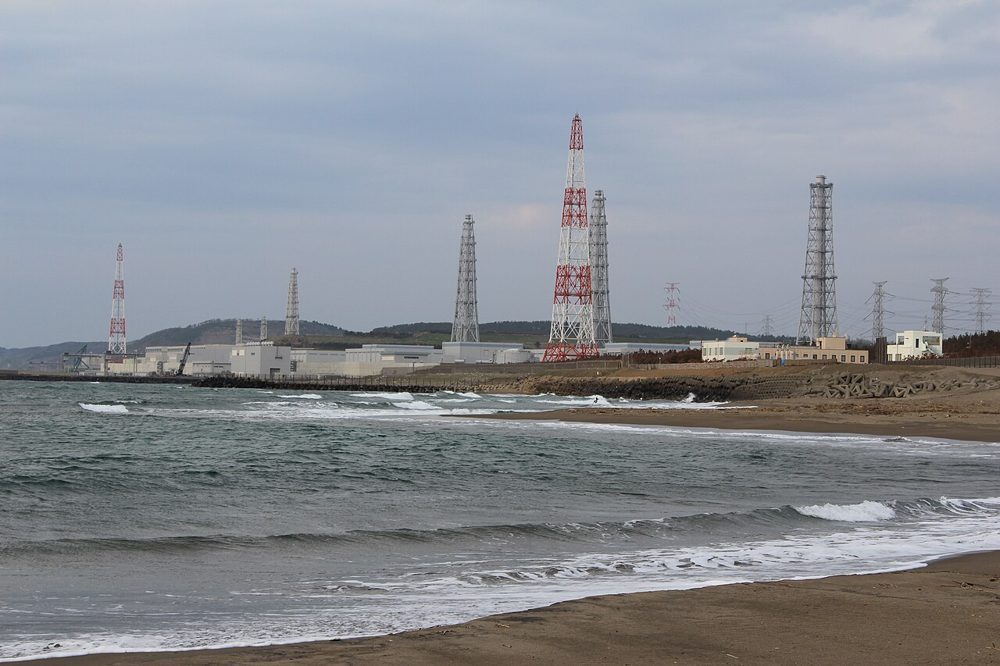 TEPCO
TEPCO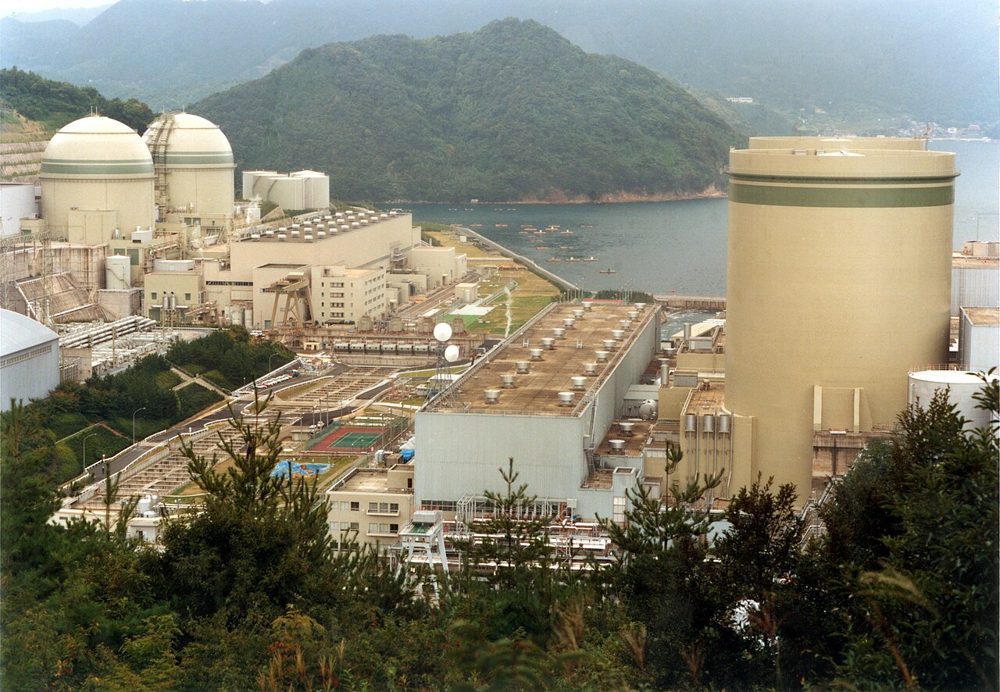 Kansai Electric Power
Image: Kashiwazaki-Kariwa Nuclear Power Plant (Triglav, CC BY-SA 3.0) / Takahama Power Station (IAEA Imagebank, CC BY-SA 2.0), Wikimedia Commons

.jpg)
Company History: Two Firms Born of the Same 1951 Reorganization, Diverging Sharply After 2011
Both TEPCO and Kansai Electric Power trace their direct origins to the Electric Utility Industry Reorganization Order of May 1, 1951. That reorganization dismantled Japan's wartime-era Nippon Hassoden (which had centralized generation and transmission nationwide) along with regional distribution companies (Kanto Haiden, Kansai Haiden, and others), and set up nine regionally monopolistic utilities across the country, each running generation, transmission/distribution, and retail as a single vertically integrated business. TEPCO took over Kanto Haiden's operations; Kansai Electric Power took over Kansai Haiden's. Trace TEPCO's lineage further back and it lands on Tokyo Dento (Tokyo Electric Light Co., Ltd.), founded in 1883. Tokyo Dento merged with and acquired many power companies through the Meiji and Taisho eras, then folded into Nippon Hassoden in 1939 and Kanto Haiden in 1942, before TEPCO re-emerged in 1951. Kansai Electric Power similarly inherited 1.13 million kW of hydroelectric and 1.15 million kW of thermal generation capacity when it launched in 1951.
What stands out in the decades that followed is a stark difference in how early each company moved into nuclear power. Kansai Electric Power brought Mihama Power Station Unit 1 into commercial operation on November 28, 1970 — the first commercial pressurized-water reactor (PWR) run by any Japanese utility. It even supplied power to Expo '70 in Osaka on August 8 that same year. Within about 20 years of its founding, Kansai Electric Power had established itself as Japan's nuclear power pioneer — an early accumulation of expertise that carries straight through to the lead it holds in post-2011 restarts, covered below.
TEPCO's single biggest turning point came on March 11, 2011: the Fukushima Daiichi Nuclear Power Plant accident, triggered by the Great East Japan Earthquake. In the accident's aftermath, TEPCO was effectively nationalized and has continued rebuilding under a succession of comprehensive special business plans overseen by the Nuclear Damage Compensation and Decommissioning Facilitation Corporation. On April 1, 2016 — timed with Japan's full retail deregulation and the legal separation of generation from transmission/distribution — TEPCO moved to a holding-company structure and renamed itself Tokyo Electric Power Company Holdings, Inc. It split its operations into Tokyo Electric Power Fuel & Power (thermal generation and fuel procurement, later folded into the Chubu Electric Power joint venture JERA in 2019), Tokyo Electric Power Grid (transmission/distribution), and Tokyo Electric Power Energy Partner (retail). The Fukushima Daiichi and Daini accidents mark the point where TEPCO's very structure changed — from a single regional monopoly holding generation, transmission/distribution, and retail together, to a holding company sitting atop function-specific subsidiaries. That structural break is the single biggest historical difference between TEPCO and Kansai Electric Power.
Comparing Company Scale: Five-Year Trend
The scale of the two companies' earnings swings only becomes visible in a five-year time series (FY2022/3 through FY2026/3) — a single-year snapshot hides it entirely.
| Fiscal Year | TEPCO HD Revenue | TEPCO HD Operating Profit | Kansai EP Revenue | Kansai EP Operating Profit |
|---|---|---|---|---|
| FY2022/3 | ¥5.3099 trillion | ¥46.2 billion | ¥2.8518 trillion | ¥99.3 billion |
| FY2023/3 | ¥8.1122 trillion | -¥229.0 billion (loss) | ¥3.9518 trillion | -¥52.1 billion (loss) |
| FY2024/3 | ¥6.9183 trillion | ¥278.9 billion | ¥4.0593 trillion | ¥728.9 billion (peak) |
| FY2025/3 | ¥6.8103 trillion | ¥234.5 billion | ¥4.3371 trillion (peak) | ¥468.9 billion |
| FY2026/3 | ¥6.3285 trillion | ¥337.6 billion | ¥4.0566 trillion | ¥437.5 billion |
| Fiscal Year | TEPCO HD Ordinary Income | TEPCO HD Net Income | Kansai EP Ordinary Income | Kansai EP Net Income |
|---|---|---|---|---|
| FY2022/3 | ¥42.2 billion | ¥2.9 billion | ¥136.0 billion | ¥85.8 billion |
| FY2023/3 | -¥285.4 billion (loss) | -¥123.6 billion (loss) | -¥6.7 billion (loss) | ¥17.7 billion |
| FY2024/3 | ¥425.5 billion | ¥267.9 billion | ¥766.0 billion (peak) | ¥441.9 billion (peak) |
| FY2025/3 | ¥254.4 billion | ¥161.3 billion | ¥531.7 billion | ¥420.4 billion |
| FY2026/3 | ¥417.3 billion | -¥454.2 billion (loss, on a ¥913.8 billion disaster-related special loss) | ¥518.5 billion | ¥380.0 billion |
| Metric | TEPCO Holdings | Kansai Electric Power |
|---|---|---|
| Consolidated employees | 38,341 | 31,428 (FY ending Mar 2025) |
Both companies swung to operating and ordinary losses in FY2023/3. That was an industry-wide shock: fuel and wholesale power prices spiked following Russia's invasion of Ukraine (February 2022), and regulated-rate increases couldn't keep pace with the jump in procurement costs. What happened next is where the two companies diverge. Kansai Electric Power rebounded V-shaped to a record ¥766.0 billion in ordinary income and ¥441.9 billion in net income in FY2024/3, then eased gradually lower through FY2025/3 and FY2026/3 while staying at historically high levels. TEPCO also recovered sharply in FY2024/3, but in FY2026/3 a ¥913.8 billion disaster-related special loss (believed to relate to Fukushima Daiichi accident costs) pushed it to a net loss even as operating and ordinary income both improved. Recovering from the same fuel-price shock on largely the same trajectory, only TEPCO gets dragged back under by a separate weight — accident-related costs — and that asymmetry is what these five years of numbers show.
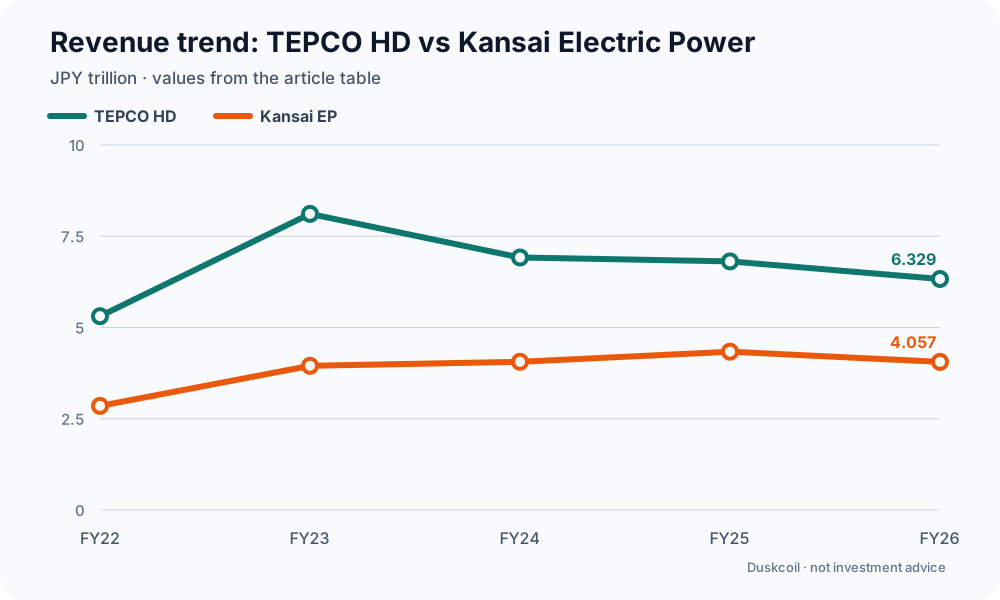
Diagram: Duskcoil. Revenue values in the article table, converted to JPY trillions. Revenue alone does not measure earning power because fuel prices materially affect it. This diagram is not investment advice.
Comparing Core Businesses: Nuclear, Thermal, Renewables, Grid, and Retail
A power utility's business spans several layers — nuclear, thermal, and renewable generation; transmission/distribution; and retail. The two companies' emphasis differs sharply layer by layer.
Nuclear Power: A Gap in Restart Status
The gap in restart status is what ties most directly to the two companies' difference in profitability. TEPCO had gone without restarting a single one of its own nuclear reactors since the Fukushima Daiichi accident — until April 16, 2026, when Unit 6 of the Kashiwazaki-Kariwa Nuclear Power Plant in Niigata Prefecture began commercial operation. This was TEPCO's first restart since the accident, reached after a long procedural path: design and construction plan approval in September 2024, safety regulation approval in February 2025, and, in December 2025, the Niigata prefectural governor accepting the national government's request for understanding on restarting Units 6 and 7. TEPCO's fifth comprehensive special business plan also assumes Unit 7 restarts within FY2029. Kansai Electric Power, by contrast, has led the country in restarting nuclear plants since the accident. As of August 2026, it holds 7 reactors in total — Takahama (Units 1–4), Ohi (Units 3–4), and Mihama (Unit 3) — with roughly 4 typically running at any given time outside of scheduled inspection outages (as of August 2, 2026, Takahama Units 1, 2, and 4 plus Ohi Unit 3 were operating). Where TEPCO has only just reached its first restart, Kansai Electric Power already runs 4 of its 7 reactors as a matter of course — a gap of several years between where the two companies stand.
Thermal Power: TEPCO Merged Its Fleet, Kansai Electric Power Kept Its Own
The two companies' approach to thermal power is a study in contrast. In 2015, TEPCO co-founded JERA Co., Inc. with Chubu Electric Power on a 50/50 basis, and by April 2019 — following a June 2017 agreement — had fully folded its existing thermal generation business into JERA. The combined entity became Japan's largest power generator, with roughly 67 million kW of domestic capacity — which also means TEPCO Holdings itself no longer directly owns any large-scale thermal power plants. Kansai Electric Power, by contrast, still owns and runs six thermal plants outright — Himeji No. 1, Himeji No. 2, Maizuru, Sakai Port, Gobo, and Nanko — with combined capacity of roughly 8.76 million kW. TEPCO chose to merge its thermal fleet into a larger, more efficient joint venture; Kansai Electric Power chose to keep its generation in-house — a decision that runs in the opposite direction from the choice each made on nuclear power.
Renewable Energy: An Inherited Hydro Base Versus an Offshore Wind Push
The two companies also start from different places in renewables. In April 2020, TEPCO spun off its hydro, solar, and wind generation businesses into Tokyo Electric Power Company Renewable Power, Inc. That company owns a large legacy hydro fleet built up over the postwar decades — 163 plants totaling roughly 9.8 million kW, concentrated on the Tone, Shinano, and Sagami/Fuji river systems. In offshore wind, it began commercial operation of Japan's first fixed-bottom offshore wind farm off Choshi (Chiba Prefecture) in January 2019, and in December 2023 was selected — together with Sumitomo Corporation in a joint consortium — as the operator for an offshore wind project off Eshima, Saikai City, Nagasaki Prefecture (28 turbines of 1.5 MW each, 42 MW total capacity, a bid price of ¥22.18/kWh, targeting operation around August 2029). The company is targeting 6–7 million kW of total renewable development capacity domestically and abroad. Kansai Electric Power, meanwhile, is targeting 6 million kW of installed capacity domestically and abroad by the 2030s (including over 2 million kW of new development), and 5 million kW of new development / 9 million kW of cumulative development by 2040 — a target set that leans more heavily on future absolute growth than TEPCO's does. Its plans span solar, biomass, and geothermal alongside onshore and offshore (including floating) wind, but its current installed capacity isn't broken out in as much public detail as TEPCO's.
Transmission and Distribution: More Than Double the Demand
Transmission and distribution fall to Tokyo Electric Power Grid and Kansai Transmission and Distribution, respectively. Using slightly dated but still illustrative figures, FY2018 demand in the Tokyo service area was 289.387 billion kWh — the largest of Japan's ten regions, at roughly a third of national demand — versus 144.997 billion kWh in the Kansai service area, roughly half of Tokyo's. TEPCO's transmission and distribution infrastructure operates at a substantially larger absolute scale.
Retail: Post-Deregulation Share Shifts and Regulated Rates
Since full retail deregulation in 2016, both companies have lost customers to new entrant retailers ("shinden-ryoku"). The Tokyo area's new-entrant share is the highest of any region in Japan, at roughly 30% as of December 2024 (versus a national average of about 17%). Competition is also intense in the Kansai area — against Osaka Gas among others — and switching rates there are said to be high nationally as well, though we could not confirm a specific figure on par with the Tokyo data from public sources. Where the two companies diverge more concretely is the May 2023 regulated-rate increase: METI approved rate hikes for seven "deemed retail electricity providers" — Hokkaido Electric Power, Tohoku Electric Power, Tokyo Electric Power Energy Partner, Hokuriku Electric Power, Chugoku Electric Power, Shikoku Electric Power, and Okinawa Electric Power — and TEPCO is on that list. Kansai Electric Power is not. In other words, Kansai Electric Power weathered the fuel-price spike without raising its regulated rates at all — a concrete fact that backs up the fuel-cost-suppression effect of its higher share of nuclear generation.
A Difference in Technology Strategy: Kansai Electric Power's Nuclear Legacy, TEPCO's Bet on Next-Generation Power
The two companies' technology and business strategies ultimately trace back to their differing histories with nuclear power, and to where each sees its next growth opportunity given that history.
Kansai Electric Power's strength rests on more than 55 years of nuclear operating know-how accumulated since Mihama Unit 1 in 1970, plus a long-standing relationship of trust with host communities in Fukui Prefecture. That accumulated trust is part of why it was able to clear post-accident restart reviews ahead of the rest of the country, and its current focus centers on renewing existing sites — a feasibility study for a Mihama successor unit, and replacement studies for the Nanko and Himeji No. 1 thermal plants. At the same time, it's building on the stable earnings nuclear provides to push into demand-response (DR) and virtual power plant (VPP) business aggregating customer-side resources — "E-Flow" — with IIJ (Internet Initiative Japan) joining that VPP business in 2022, turning distributed energy resources into a new revenue stream. Kansai Electric Power's technology strategy pairs nuclear power as a defensive foundation with a customer-facing DR/VPP offensive built on top of it.
TEPCO, with its Kashiwazaki-Kariwa restart still standing at just one unit some 15 years after the accident, isn't in a position to lean on nuclear as an immediate growth engine. What stands out instead is how clearly it has positioned offshore wind as a new growth area, built on top of its inherited postwar hydro base (163 plants, roughly 9.8 million kW). Starting commercial operation of Japan's first fixed-bottom offshore wind farm off Choshi in 2019 gave it a track record, and the 2023 selection for the Eshima project reflects a strategy of methodically building on that track record project by project. What emerges is a contrast: TEPCO diversifying its earnings base through renewables it can reliably add to, while carrying the large unresolved variable of nuclear restart timing; Kansai Electric Power leaning directly into the strength it already has in nuclear, while layering customer-facing services on top of it.
Development & Generation Facilities
Beyond its Tokyo headquarters, TEPCO operates the Kashiwazaki-Kariwa Nuclear Power Plant, the Fukushima Daiichi and Daini nuclear plants (both under decommissioning), large-scale hydroelectric facilities (Tanbara and Kannagawa power stations), and an offshore wind farm (off Choshi). Kansai Electric Power operates, beyond its Osaka headquarters, three nuclear plants (Takahama, Ohi, Mihama) and six thermal plants it owns outright. The map below plots every major facility we could confirm (overseas facilities and former TEPCO thermal plants now run by JERA are out of scope).
Sources: TEPCO's and Kansai Electric Power's official sites (plant introduction pages, facility information) as primary sources, cross-checked for detailed addresses against map/directory services (Yahoo! Maps, NAVITIME, Mapion Phone Directory) where needed (some TEPCO official pages block scraping and were confirmed via WebSearch instead). Coordinates were geocoded to town/block level via OpenStreetMap Nominatim. Sakai Port Power Station's address failed to geocode directly, so it is plotted at the coordinates of its nearest station (Ishizugawa Station) instead. Himeji No. 1 and No. 2 sit on the same industrial site and so appear at the same point on the map.
Strategy & Outlook
TEPCO formulated its fifth comprehensive special business plan on January 26, 2026, following certification by the Nuclear Damage Compensation and Decommissioning Facilitation Corporation. Its basic policy responds to three shifts in the operating environment — progress on Fukushima Daiichi decommissioning, the push for GX (green transformation) and DX, and rising energy-security demands and power demand alongside a weakened financial position — and the reconstruction plan is built on restarting Kashiwazaki-Kariwa Unit 6 within FY2025 (it actually happened in April 2026) and Unit 7 within FY2029. In light of concerns about TEPCO operating nuclear plants at all, a "Kashiwazaki-Kariwa Nuclear Power Plant Operations Enhanced Oversight Team" — coordinating relevant ministries under the Deputy Chief Cabinet Secretary — held its first meeting in January 2026: the restart remains central to TEPCO's turnaround even as it stays under heavy political and social scrutiny.
Kansai Electric Power announced its "Kansai Electric Power Group Management Plan 2026 (KX: Kanden Transformation toward 2040)," covering FY2026–2028, on April 30, 2026. Citing projected growth in power demand, it commits to accelerating power development at suitable sites nationwide on top of replacing existing generation assets. On nuclear, that means a feasibility study for a Mihama successor unit, technology development for next-generation advanced reactors, and advancing the nuclear fuel cycle including spent-fuel measures; on thermal, replacement studies for Nanko and Himeji No. 1 and accelerating LNG thermal replacement/new-build through partner collaboration; on renewables, advancing existing offshore wind projects and developing/studying floating offshore wind. A tailwind here is the February 2025 revision to the government's Strategic Energy Plan, which explicitly calls for maximizing nuclear power utilization and rebuilding toward next-generation advanced reactors, plus the GX Decarbonization Power Supply Act passed in May 2023, which moved the rule allowing up to 20 additional years beyond the effective 40-year operating limit from the Reactor Regulation Act to the Electricity Business Act — part of a broader policy pivot back toward nuclear power. For Kansai Electric Power, already ahead on accumulated nuclear expertise, this policy shift is a tailwind for expansion; for TEPCO, it could equally be an opportunity to close the restart gap — a structural shift playing out across the whole industry.
References
- TEPCO Holdings Official Site / Kashiwazaki-Kariwa Nuclear Power Plant Information (Japanese)
- Kansai Electric Power Official Site / Nuclear Power Plant Operating Status (Japanese)
- Agency for Natural Resources and Energy: "Kashiwazaki-Kariwa Unit 6 Restarts" (Japanese)
- The Federation of Electric Power Companies of Japan: Nuclear Restart Status Nationwide (Japanese)
- TEPCO Group - Wikipedia (Japanese) / Kansai Electric Power Company History (Japanese)
- Kansai Electric Power Company Overview (Japanese)
- Agency for Natural Resources and Energy: Explainer on Retail Deregulation and Legal Unbundling (Japanese)
- IRBANK: TEPCO Holdings financial results (Japanese) / IRBANK: Kansai Electric Power financial results (Japanese)
- Nikkei: "TEPCO HD's FY2023/3 net loss of ¥123.631 billion" (Japanese)
- JERA Co., Inc. Official Site (Japanese) / TEPCO Fuel & Power: agreement to integrate into JERA (Japanese)
- Kansai Electric Power: About Thermal Power Generation (Japanese)
- TEPCO Renewable Power: hydroelectric power business (Japanese) / Choshi Offshore Wind Farm overview (Japanese)
- TEPCO Renewable Power: "Selected as operator for the offshore wind project off Eshima, Saikai City, Nagasaki" (Japanese)
- Kansai Electric Power: VPP / demand-response services (Japanese) / IIJ joins Kansai Electric Power's VPP business (Japanese)
- TEPCO Holdings: Fifth Comprehensive Special Business Plan (Japanese, PDF)
- Kansai Electric Power Group Management Plan 2026 (Japanese, PDF)
- Nikkei: "Kansai Electric Power gains momentum on new nuclear builds; also pushing offshore wind" (Japanese)
- Japan Atomic Industrial Forum: "Nuclear plant rebuild targets formally decided" (Japanese)
- Overview of Mihama Power Station (Kansai Electric Power, Japanese)
Current step · 15 / 21 · Corporate Research
Comments
Please log in to post a comment
No comments yet.