Contents — find the section you need
Background and reading guide
Background No specialist background required; check the reporting period and scope of financial measures.
Industry research · Read the sources, reporting period and comparison criteria together.
Mitsubishi Heavy Industries (MHI), Kawasaki Heavy Industries (KHI), and IHI all trace back to shipyards founded in the late Edo and early Meiji periods and have since expanded into energy, aerospace/defense, and industrial machinery. Rising defense spending and a recovering aviation market have pushed all three to record-level profits in both FY2025/3 and FY2026/3, yet their scale differs by nearly threefold in revenue, and the flagship product or technology area where each one's strength shows most clearly diverges sharply. Submarine construction is a rare head-on rivalry, with MHI and KHI alternating build years — while IHI runs a concentrated, asymmetric business built around a single category: aircraft engines.
 Mitsubishi Heavy Industries
 IHI
IHI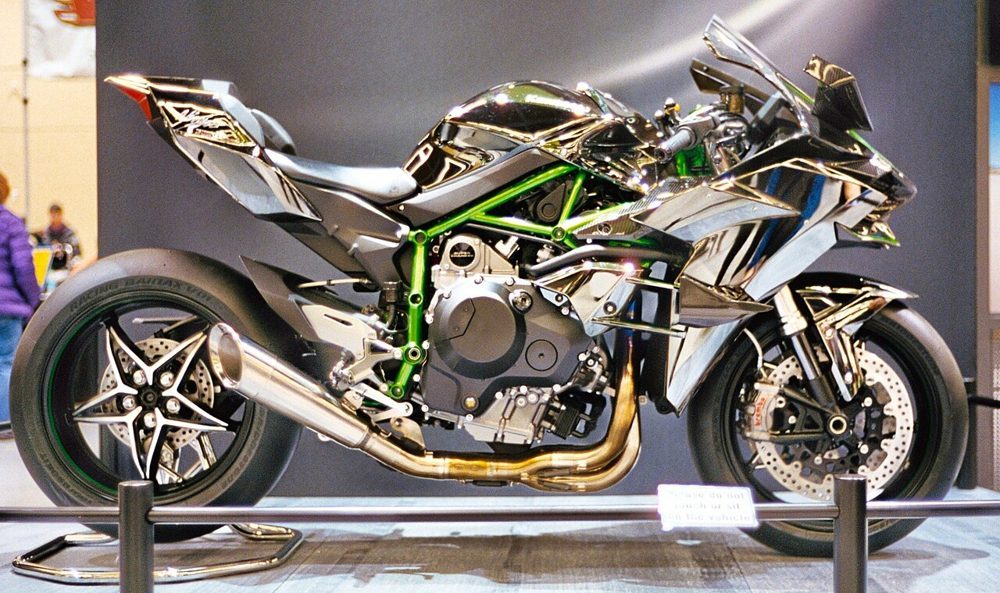 Kawasaki Heavy Industries
Image: Mitsubishi Heavy Industries logo / IHI logo (both public domain; trademark rights still apply separately) / Kawasaki Ninja H2R (Dennis Bratland, CC BY-SA 4.0), Wikimedia Commons


Company History: From Late-Edo and Meiji Shipyards to Three Heavy-Industry Giants
Mitsubishi Heavy Industries traces to 1884, when Yanosuke Iwasaki, the second head of the Mitsubishi zaibatsu, leased facilities from the Ministry of Public Works' Nagasaki Shipbuilding Bureau and took over the business as the Nagasaki Shipyard. The facilities were bought outright in 1887, and in 1917 the shipyard split off from Mitsubishi Goshi Kaisha as an independent company, Mitsubishi Shipbuilding Co. In April 1934, Mitsubishi Shipbuilding was renamed Mitsubishi Heavy Industries (the first incarnation), absorbing Mitsubishi Aircraft that June. After the war, the zaibatsu dissolution split the company into three regional firms — East Japan Heavy Industries, Central Japan Heavy Industries, and West Japan Heavy Industries — which were reunified in 1964 into the present-day Mitsubishi Heavy Industries.
IHI's roots run even deeper: it originates from the Ishikawajima Shipyard, opened in 1853 (the year of Commodore Perry's arrival) when the Tokugawa shogunate, under pressure to respond to the Western powers, ordered the Mito domain to establish a shipyard — making it one of Japan's oldest heavy-industry companies. In 1876, Tomiji Hirano leased the site of the former Ishikawajima ship-repair yard from the Navy Ministry and founded the Ishikawajima Hirano Shipyard, which grew into the Ishikawajima Limited Liability Shipyard in 1889 and, in 1893, the Tokyo Ishikawajima Shipbuilding Co. (with Eiichi Shibusawa as chairman). In December 1960 the company merged with Harima Shipbuilding & Engineering to form Ishikawajima-Harima Heavy Industries — IHI's former name — and was renamed the present "IHI Corporation" in 2007.
Kawasaki Heavy Industries began in 1878, when Shozo Kawasaki opened the Kawasaki Tsukiji Shipyard in Tokyo's Tsukiji district. Its first vessel was a Western-style wooden ship, the 80-ton Hokkai Maru. In 1881 Kawasaki opened the Kawasaki Hyogo Shipyard in Higashide-cho, Hyogo, and in 1886 leased and merged with the government-run Hyogo Shipyard, renaming the combined operation the "Kawasaki Shipyard" — shifting the company's center of gravity to Kobe. It incorporated in 1896, then spun off Kawasaki Kisen (shipping) in 1919, Kawasaki Sharyo (rolling stock) in 1928, and Kawasaki Aircraft in 1937, before renaming itself "Kawasaki Heavy Industries, Ltd." in 1939 to reflect its growing diversification. All three companies share shipbuilding as their founding business, but each followed a distinct path to its present form: MHI through a zaibatsu-linked split and reunification, IHI through a shogunate-chartered shipyard's long evolution, and KHI through one individual's founding and subsequent diversification.
Comparing Company Scale: Five-Year Trend
All three companies share the same fiscal year end (March), making a direct comparison straightforward. Looking at the trend over the last five fiscal years (FY2022/3 through FY2026/3) rather than a single snapshot makes the difference in growth speed much clearer.
| Fiscal Year | MHI Revenue | MHI Operating Profit | KHI Revenue | KHI Operating Profit | IHI Revenue | IHI Operating Profit |
|---|---|---|---|---|---|---|
| FY2022/3 | ¥3.8602 trillion | ¥99.1 billion | ¥1.5009 trillion | ¥45.8 billion | ¥1.1729 trillion | ¥81.5 billion |
| FY2023/3 | ¥4.2028 trillion | ¥141.4 billion | ¥1.7256 trillion | ¥81.5 billion | ¥1.3529 trillion | ¥82.0 billion |
| FY2024/3 | ¥4.6571 trillion | ¥234.8 billion | ¥1.8493 trillion | ¥36.2 billion | ¥1.3225 trillion | -¥70.1 billion (loss) |
| FY2025/3 | ¥4.3612 trillion | ¥287.0 billion | ¥2.1293 trillion | ¥124.6 billion | ¥1.6268 trillion | ¥143.5 billion |
| FY2026/3 | ¥4.9742 trillion | ¥449.9 billion | ¥2.3113 trillion | ¥126.2 billion | ¥1.6434 trillion | ¥165.5 billion |
| Metric | Mitsubishi Heavy Industries | Kawasaki Heavy Industries | IHI |
|---|---|---|---|
| Consolidated employees | Low 80,000s (as of FY2026/3) | ~41,000 (as of FY2025/3) | ~28,000 (same) |
| Equity ratio | Mid-30% range | 24.6% | 23.0% |
| Sales to Japan's Ministry of Defense (FY2025/3) | ¥704.2 billion (largest of the three) | ¥400.9 billion | Not disclosed (only reported as part of a combined segment) |
MHI's revenue grew roughly 29% over five periods, while operating profit grew 4.5x — a direct result of concentrating on high-margin areas like nuclear power, defense, and gas turbines. KHI posted revenue growth for five consecutive periods, roughly 1.5x overall, but saw a sharp, temporary dip in operating profit in FY2024/3, suggestive of a business portfolio still mid-transition (discussed below). IHI's standout feature is the operating loss (-¥70.1 billion) it posted in FY2024/3 — driven mainly by roughly ¥154.1 billion in one-time charges tied to an additional inspection program for the PW1100G-JM engine (used on the Airbus A320neo family) and roughly ¥14.6 billion in litigation-settlement costs from a North American plant project. IHI swung back to profit in FY2025/3 and has posted two straight years of profit growth into FY2026/3, in the middle of a V-shaped recovery. MHI's revenue stands out — roughly two to three times either KHI's or IHI's. MHI also holds the most stable financial footing by equity ratio, with KHI and IHI both running somewhat lower, in the low-to-mid 20% range.
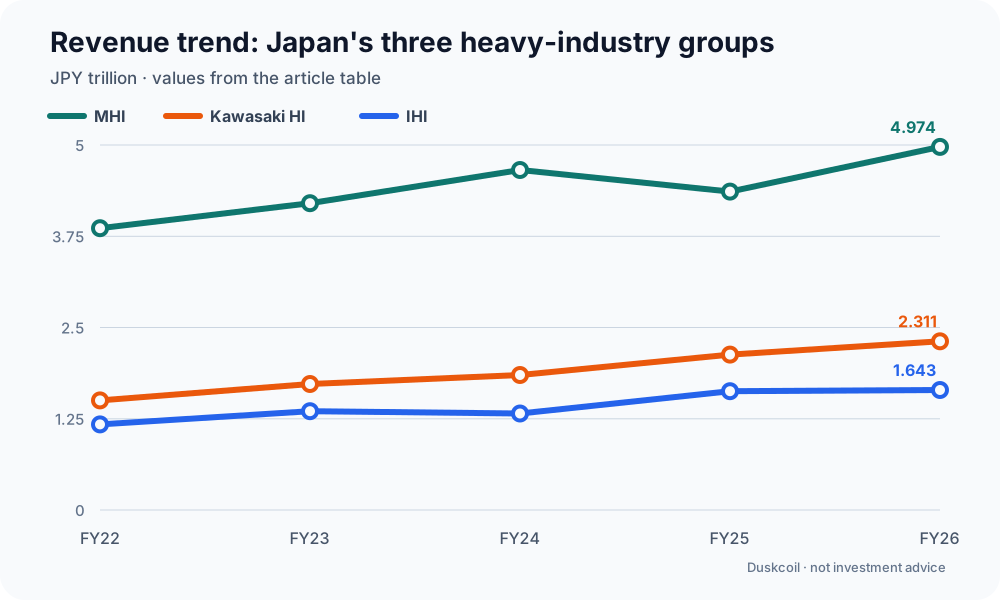
Diagram: Duskcoil. Revenue values in the article table, converted to JPY trillions. This diagram is not investment advice.
Comparing Flagship Products: Where They Collide, and Where They Don't
Grouped together as "heavy industry," the three companies' business portfolios don't overlap uniformly. Submarines are a case of head-on competition; rockets show a clean division of labor; and in some areas — like space and defense platforms — only one or two of the three participate at all.
Defense Equipment: Submarines Alternate Yearly, IHI Stays an Engine Specialist
Submarines for Japan's Maritime Self-Defense Force follow an unusual arrangement rare in Japan's defense industry: MHI's Kobe Shipyard and KHI's Kobe Factory alternate, building one boat per year each. The current-generation Taigei class follows the same pattern — in 2025, KHI delivered the Raigei to the Ministry of Defense, and MHI delivered a Choge-class boat, both from their respective Kobe yards.
| Item | Mitsubishi Heavy Industries | Kawasaki Heavy Industries | IHI |
|---|---|---|---|
| Submarine construction | Yes (Kobe Shipyard, alternating years) | Yes (Kobe Factory, alternating years) | No (no construction track record) |
| Fighter aircraft / missiles | Yes (F-2/F-15 upgrades; Japan-side prime contractor for GCAP; leads the standoff-missile conversion of the Type 12 surface-to-ship missile capability enhancement model) | Partial (T-4 trainer, guided munitions) | No (no platform participation) |
| Escort ships / exported vessels | Yes (Mogami-class frigate — in April 2026 signed a roughly ¥1 trillion co-development/production contract for 11 enhanced units for Australia, Japan's first postwar warship export) | Partial (supplies some onboard shipborne equipment) | No |
| Patrol aircraft / transports / large helicopters | Partial | Yes (prime contractor for the P-1 patrol aircraft and C-2 transport; licensed production of the CH-47 heavy-lift helicopter) | No (no platform participation) |
| Aircraft engine supply | Partial (involved in some domestic fighter-engine production) | Partial | Extensive (prime contractor for the engines of most aircraft used by Japan's Ministry of Defense, supplying engines across fighters, patrol aircraft, and trainers alike) |
| MoD sales, FY2025/3 | ¥704.2 billion | ¥400.9 billion | Not disclosed |
Where MHI and KHI compete or split responsibility directly over "platforms" — ships and fighters — IHI belongs to no platform at all, instead specializing in engines, a function that cuts across every platform, which lets it participate as a component supplier to essentially any piece of defense equipment. That's exactly how IHI holds a strong defense presence despite trailing the other two in overall scale — but it's also the flip side of a concentration risk: IHI's results hinge less on procurement trends across defense equipment broadly and more on supply-and-demand in the single category of engines.
Space: A Three-Way Division of Labor on the H3 Rocket
Space is a case not of competition but of a clean division of labor. MHI is the core of manufacturing and launch for Japan's mainstay H3 rocket, with its Tobishima Plant in Tobishima, Aichi Prefecture handling everything from first- and second-stage tank manufacturing through airframe assembly and functional testing. IHI (through subsidiary IHI Aerospace) builds the H3's solid rocket boosters and gas-jet devices, and also handles development and manufacturing of the Epsilon rocket in its entirety. KHI's strength is manufacturing satellite fairings — the nose cones that shield satellites from wind pressure and vibration during launch — and it supplies the fairings used on the H3. With all three companies handling a different part of the same rocket, space stands in clear contrast to the "rivalry" structure seen in defense: this is a "collaboration."
Energy Plants: Head-to-Head on Gas Turbines, Divergent Hydrogen Strategies
Thermal-power gas turbines put MHI and KHI in direct competition. MHI's M701JAC is a world-leading large-class machine — 1,650°C turbine inlet temperature, over 64% combined-cycle efficiency, 840 MW output for 50Hz regions — while KHI's L30A, the largest machine it has developed in-house, is a mid/small-class 30 MW-class unit offering over 40% generation efficiency and the ability to co-fire 20–50 vol% byproduct hydrogen. The two target different market segments: MHI's large combined-cycle plants serve major utilities, while KHI's distributed cogeneration systems target factories and industrial users. IHI doesn't compete on gas turbines themselves, instead focusing on adjacent plant equipment — boilers, LNG tanks, chemical-plant facilities — making this another area of asymmetric overlap among the three.
Next-generation fuel strategy diverges too. IHI has put its weight behind ammonia co-firing and mono-firing; KHI has bet on a hydrogen supply chain, building an integrated system spanning liquefied-hydrogen carriers, loading terminals, and hydrogen gas turbines; MHI is pursuing both hydrogen and ammonia in parallel, including moves to absorb hydrogen-production know-how through stakes in overseas companies.
Each Company's Signature Product
Each of the three also has its own signature product that neither of the others fields.
The flagship of MHI's Energy business (a segment in the low-to-mid ¥2 trillion range, the core of its machinery/plant group) is the gas turbine noted above, the M701JAC. Since its trial run began in 2020, it has been adopted in Thailand, Vietnam, Qatar, and elsewhere, accumulating more than 3 million hours of operation.
IHI is the leading company behind 60–70% of Japan's jet engine production. On the civil side too, it participates in international joint development programs with manufacturers worldwide, spanning large to small commercial aircraft engines, developing and supplying engine modules and components. The flip side of this focus is that IHI's business is concentrated: 77% of its profit comes from the "Aerospace, Defense & Space" segment, leaving its results unusually exposed to swings in aircraft demand — including single-program troubles like the PW1100G-JM issue noted above.
Beyond aerospace systems and energy/environmental plants, Kawasaki Heavy Industries also runs motorcycle and robotics businesses that neither of the other two companies has — making it the most diversified of the three heavy-industry makers. The emblematic product is the Kawasaki Ninja H2R, among the fastest production-based motorcycles in the world, pairing a 998cc inline-four engine with an in-house-developed supercharger to produce 321.5 hp. Engineers from the company's aerospace, gas turbine, and machinery divisions were involved in designing that supercharger — the Ninja H2R was built, in part, as a showcase for the engineering capability of the heavy-industry group as a whole. Its industrial robotics business is growing too, with a target of ¥400 billion in revenue (roughly 4x current scale) by fiscal 2030.
A Difference in Technology Strategy
The three companies' technology strategies each reflect the shape of their underlying business portfolios.
Mitsubishi Heavy Industries pursues "selection and concentration," narrowing its resource allocation toward the high-margin, high-growth areas of nuclear power, gas turbines, and defense. In September 2025 it announced the sale of forklift subsidiary Mitsubishi Logisnext to investment fund Japan Industrial Partners for roughly ¥130 billion, judging that it couldn't compete with dedicated makers in a commodity-scale business — a clear signal it's prioritizing investment in defense and energy. In defense, MHI is establishing a new growth axis of exporting domestically fielded equipment abroad, exemplified by the Mogami-class frigate's export to Australia (contract signed April 2026, 11 enhanced units worth roughly ¥1 trillion).
IHI takes the strategy of doubling down, risk and all, on a single category: aircraft engines. Its center of gravity is shifting from selling engines outright toward growing aftermarket revenue from maintenance, repair, and overhaul (MRO), with automation and digitalization aimed at improving service quality and efficiency. The large FY2024/3 loss was the cost of this concentrated strategy coming due, but by FY2026/3 profit had recovered to record-adjacent levels, and the president himself has stated a goal of "drawing a line under restructuring within the fiscal year" — a stance that still includes exiting unprofitable businesses as part of a thorough structural overhaul.
Kawasaki Heavy Industries relies on a "plane"-shaped diversification strategy, treating technology transfer across unrelated business lines — motorcycles, robotics, hydrogen — as a core strength. Supercharger technology developed in its aerospace division found its way into the Ninja H2R, and that kind of cross-division reuse of engineering has become embedded in the company's design culture. In hydrogen, KHI is pursuing vertical integration end to end — liquefaction, transport, unloading, power generation — and has set a goal of converting every model in its power-generation engine and gas-turbine lineup (barring emergency-use units) to 100% hydrogen capability by 2030, making it the most aggressively hydrogen-forward of the three.
Development & Manufacturing Facilities
Beyond its Tokyo head-office functions, MHI operates numerous shipyards and works across Japan. KHI runs a dual Tokyo/Kobe head-office structure alongside its domestic production facilities. IHI is centered on its Toyosu, Tokyo headquarters, with aircraft-engine and energy-plant plants spread across the country. The map below plots every major facility we could confirm (overseas facilities and every affiliate-company plant are out of scope).
Sources: facility names come from each company's official site (locations/offices pages) for MHI, KHI, and IHI respectively. Addresses confirmed on each company's own official page are treated as primary-source; where a company's own page didn't give a confirmable address, it was individually verified via map/directory services (NAVITIME, Yahoo! Map, Mapion Phonebook, etc.) — noted honestly here. Coordinates were geocoded to town/block level via OpenStreetMap Nominatim. All three companies' affiliate-company plants and overseas facilities are excluded in principle; the selection centers on each company's core headquarters, shipyards, works, and plants.
Strategy & Outlook
Two tailwinds — the push to raise defense spending to 2% of GDP (announced by the Takaichi administration in October 2025, targeted for completion by fiscal 2027, with Japan's defense budget projected to grow from roughly ¥5.4 trillion in FY2022 to roughly ¥11 trillion by FY2027) and a post-pandemic recovery in aviation demand — carried all three companies to record-adjacent profits in both FY2025/3 and FY2026/3. Defense orders have surged too: MHI's defense and space orders in FY2025/3 reached roughly ¥1.8 trillion, more than three times the level seen before the defense-spending expansion began.
Mitsubishi Heavy Industries, under its mid-term plan "FY2024 Business Plan" (FY2024–2026), is targeting discontinuous growth: ¥5.7 trillion in revenue (+20% over FY2023) and over ¥450 billion in business profit (+60%) by fiscal 2027. The Mitsubishi Logisnext divestiture noted above — exiting a commodity-scale business — and the Mogami-class frigate's export to Australia — pushing domestically fielded defense equipment abroad — are the two moves that best symbolize this plan. MHI's "selection and concentration" push into nuclear power and defense looks set to keep accelerating on the back of growing electricity demand (from data centers and elsewhere).
Kawasaki Heavy Industries, under Group Vision 2030 ("Trustworthy Solutions for the Future"), has named three growth fields: "safe and secure remote society," "near-future mobility," and "energy and environmental solutions." Its defense business has grown to roughly 30% of total orders in FY2025/3, driven in part by licensed production of the CH-47 heavy-lift helicopter. Investment in the hydrogen supply chain continues too, as KHI works to commercialize an end-to-end system spanning liquefied-hydrogen carriers through hydrogen gas turbines.
IHI is committing ¥650 billion in investment over the next three years to aerospace, defense, space, and nuclear power, aiming to pivot from a restructuring phase to a growth-investment phase on the back of a recovery in commercial aircraft engine demand that had slumped during the pandemic. In its FY2025 (FY2026/3) results, IHI posted ¥1.6434 trillion in revenue and ¥165.5 billion in operating profit, and expects a fourth consecutive record year in FY2027/3. Growing aftermarket revenue (maintenance and parts supply) for commercial aircraft engines, plus strengthening the engine business to capture the benefits of expanded defense budgets, are positioned as its near-term growth drivers.
What all three companies share is a push toward "selection and concentration" in the high-margin areas of defense, energy, and aerospace, paired with parallel efforts to divest or wind down non-core businesses. There's no guarantee the defense-spending tailwind continues indefinitely, and each company still carries the risk that a single-program mishap — like IHI's FY2024/3 experience — could hit results directly. Even so, near-term order books look healthy across all three, and an expansion phase centered on defense, aerospace, and energy appears likely to continue for now.
References
- Mitsubishi Heavy Industries Official Site / Gas Turbine Product Information
- Kawasaki Heavy Industries Official Site / Robot Business
- IHI Official Site / Aircraft Engine Business
- A Comparison of Mitsubishi Heavy Industries, Kawasaki Heavy Industries, and IHI via Annual Reports (Japanese)
- Mitsubishi Heavy Industries Corporate History (Integrated Report 2025, Japanese)
- IHI Corporate History
- Kawasaki History|Kawasaki Heavy Industries
- IRBANK: Mitsubishi Heavy Industries financial results / IRBANK: Kawasaki Heavy Industries financial results / IRBANK: IHI financial results
- Toyo Keizai Online: A Deep Dive on the Defense Companies' Specialties — Kawasaki Heavy Industries, Mitsubishi Heavy Industries, IHI (Japanese)
- Toyo Keizai Online: The Three Heavy-Industry Makers' Hopes and New Risks in the Export Market (Japanese)
- Nikkei: Australia Selects MHI's Enhanced Mogami-Class Frigate (Japanese)
- Nikkei: Mitsubishi Heavy Industries Sells Forklift Subsidiary to JIP (Japanese)
- Diamond Online: The Truth Behind the Heavy-Industry Boom (Japanese)
- IHI FY2023 (FY ending March 2024) Earnings Briefing Materials (Japanese)
- Kawasaki Heavy Industries Group Vision 2030
- Kawasaki Heavy Industries: High-Efficiency, Hydrogen-Capable Gas Turbine L30A (Japanese)
- IHI Aerospace: H3 Rocket / Kawasaki Heavy Industries: H3 Rocket Satellite Fairing (Japanese)
Current step · 14 / 21 · Corporate Research
Comments
Please log in to post a comment
No comments yet.