Contents — find the section you need
Background and reading guide
Background No specialist background required; check the reporting period and scope of financial measures.
Industry research · Read the sources, reporting period and comparison criteria together.
The chemicals and materials industry is an "upstream" sector rarely seen by ordinary consumers, yet it underpins the performance of virtually every advanced product, from semiconductors to aircraft. Shin-Etsu Chemical carries global weight in semiconductor materials, and Toray leads the world in carbon fiber — both companies dominate world markets on the strength of materials that are unglamorous but irreplaceable.
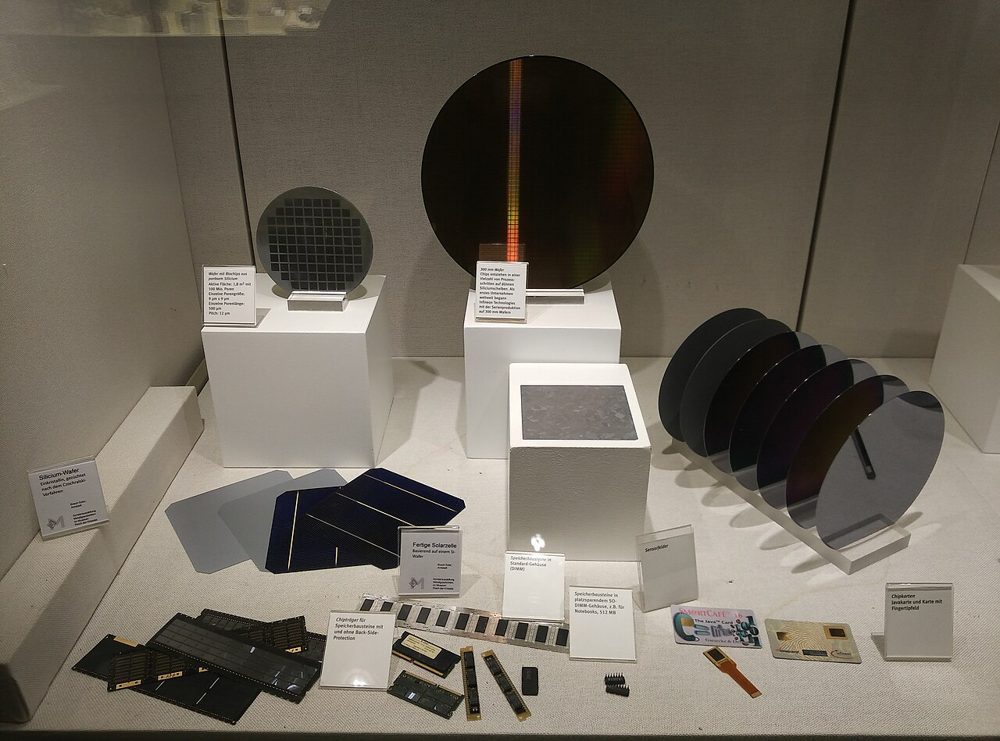 Shin-Etsu Chemical
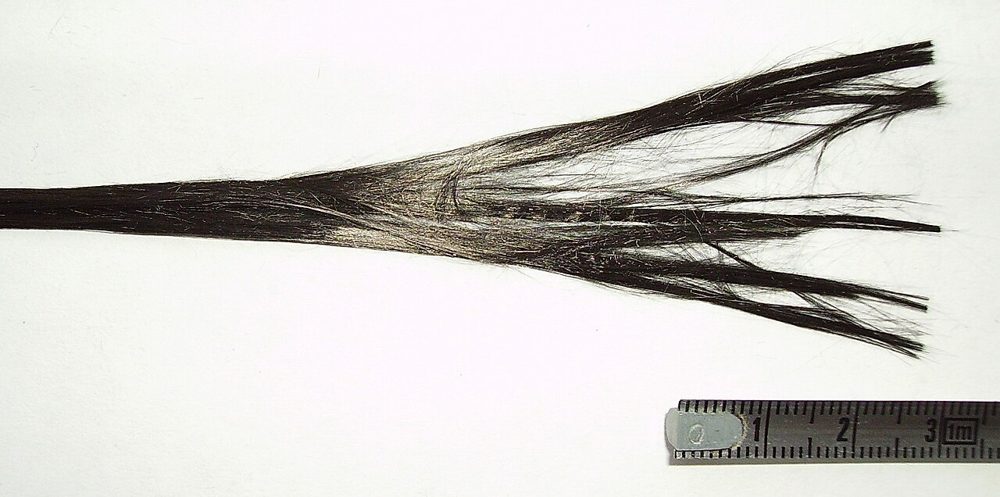 Toray
TorayImage: Silicon wafers (CC0) / Carbon fiber (public domain), Wikimedia Commons. Neither photo depicts a specific product from either company — both are general images of the materials discussed.


Company History: From a Fertilizer and Carbide Company to Semiconductor Materials, From a Rayon Maker to Carbon Fiber
Shin-Etsu Chemical was established in September 1926 as Shin-Etsu Nitrogen Fertilizer Co., Ltd., with ¥5 million in capital, through a partnership between Jusaburo Koshi of Shinano Electric Power and Shitagau Noguchi of Nippon Chisso Fertilizer (now Chisso). Its Naoetsu Plant was completed the following year, 1927, beginning production of carbide and lime nitrogen; the company changed to its current name, Shin-Etsu Chemical, in 1940. It began producing polyvinyl chloride (PVC) at the Naoetsu Plant in 1957, and the Kashima Plant — which became its main PVC production site — began operating in 1970. The company built up its semiconductor silicon business from the 1960s onward, and in 1974 established the PVC subsidiary Shintech in the US, entering the North American market. Unusually for a chemical maker, it has shifted its business far from its founding fields (fertilizer and carbide) toward its current two pillars, far removed from those origins: semiconductor materials and PVC.
Toray was established in January 1926 with ¥10 million in capital, funded by Mitsui & Co., as Toyo Rayon Co., Ltd., launching as a chemical fiber (rayon) manufacturing business. Its Shiga Plant (now Shiga Site), opened in Otsu, Shiga Prefecture, is the company's birthplace. It introduced nylon manufacturing technology from US-based DuPont in 1951, and in 1958 began producing the polyester fiber "Tetoron" jointly with Teijin, growing in scale as a synthetic fiber maker in the postwar decades. In 1971 it began producing the carbon fiber "Torayca," which would later grow into the company's flagship business — one that would eventually lead to supplying Boeing 787 (discussed below). The company changed its name to Toray Industries, Inc. in 1970.
Comparing Company Scale Over Time: The Most Recent Five Fiscal Years
Both companies' fiscal years end in March.
| Fiscal Year | Shin-Etsu Chemical Revenue | Shin-Etsu Chemical Operating Profit | Toray Revenue | Toray Operating Profit |
|---|---|---|---|---|
| FY March 2022 | ¥2.074428 trillion (+38.6% YoY) | ¥676.322 billion (+72.4% YoY) | ¥2.2285 trillion (+19% YoY) | ¥100.565 billion |
| FY March 2023 | ¥2.8088 trillion (+35.4% YoY, record high) | ¥998.202 billion (+47.6% YoY, record high) | ¥2.4893 trillion | ¥109.001 billion |
| FY March 2024 | ¥2.4149 trillion (roughly -14% YoY) | ¥701.038 billion (roughly -29.8% YoY; PVC demand normalization) | ¥2.4646 trillion (-1% YoY) | ¥57.651 billion (-47.1% YoY; carbon fiber impairment) |
| FY March 2025 | ¥2.561249 trillion (+6.1% YoY) | ¥742.105 billion (+5.9% YoY) | ¥2.5632 trillion | ¥127.453 billion (+121.1% YoY) |
| FY March 2026 | ¥2.573969 trillion (+0.5% YoY) | ¥635.204 billion (-14.4% YoY) | ¥2.585077 trillion (+0.9% YoY) | ¥97.221 billion (-23.7% YoY; on a business-profit basis, ¥141.9 billion, -0.6% YoY) |
*All figures in this section were cross-checked against each company's earnings releases and presentation materials, plus Nikkei and other press reports.
| Metric | Shin-Etsu Chemical | Toray |
|---|---|---|
| Ordinary income / net profit (FY March 2026) | Ordinary income ¥708.281 billion (-13.7% YoY); net profit ¥474.459 billion (-11.2% YoY) | Net profit ¥89.436 billion (+3.2% YoY); profit attributable to owners of the parent ¥79.521 billion (+2.1% YoY) |
| Consolidated employees | 27,342 (+68 YoY) | 46,294 (-1,620 YoY) |
Over the five-year span, both companies share a common pattern: record-setting revenue and profit growth through FY March 2022-2023, followed by a sharp pullback in FY March 2024. For Shin-Etsu Chemical, deteriorating PVC market conditions in the US (falling housing starts) was the main driver of the FY March 2024 decline; for Toray, it was an impairment on carbon fiber composite materials for wind power applications. The two companies are roughly matched in revenue scale (both in the ¥2.5 trillion range), but Shin-Etsu Chemical's operating profit runs more than 6x Toray's — giving Shin-Etsu markedly higher profitability per employee. This reflects a structural difference: Shin-Etsu Chemical concentrates its business on high-value-added materials (semiconductor silicon, PVC), while Toray is a diversified materials maker spanning fibers, functional chemicals, carbon fiber composites, and environmental engineering.
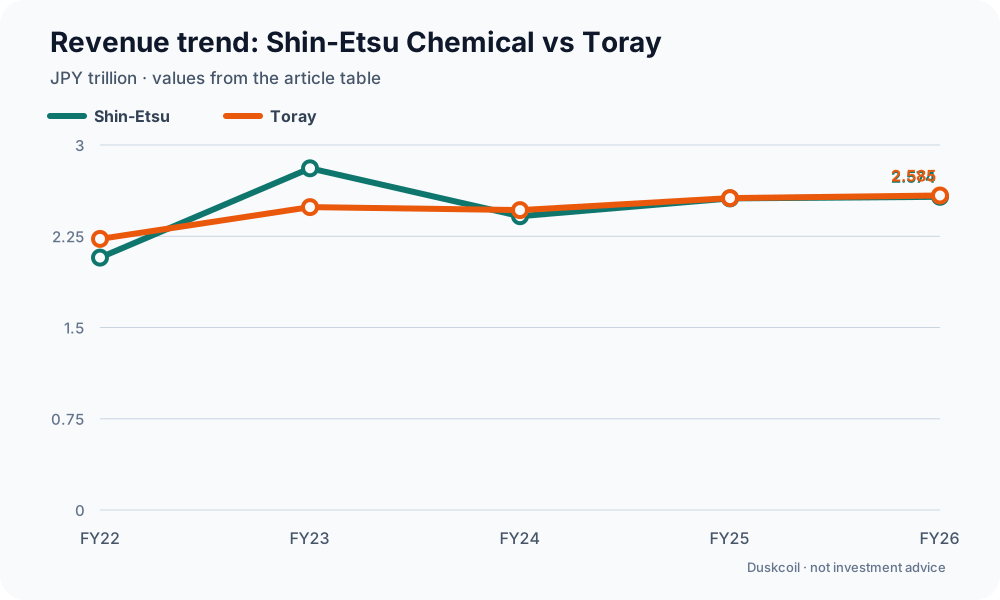
Diagram: Duskcoil. Revenue values in the article table, converted to JPY trillions. This diagram is not investment advice.
Comparing Flagship Products: Semiconductor Materials and PVC vs. Carbon Fiber and Water Treatment Membranes
Semiconductor Silicon Wafers vs. Carbon Fiber: Each Company's Flagship Product
Shin-Etsu Chemical is a materials maker holding the world's #1 share in multiple fields — PVC resin, semiconductor silicon (silicon wafers), leading-edge photomask blanks, pheromone formulations, and more. At its core is the semiconductor silicon business: silicon wafers, handled through subsidiary Shin-Etsu Handotai, are estimated to hold a 30-40%-range global share, a leading industry position. Silicon wafers are literally what semiconductor manufacturing equipment (Tokyo Electron, SCREEN Holdings, etc. — see our separate article) processes — the physical foundation of every semiconductor chip, an unglamorous but irreplaceable material. The electronic materials business as a whole posted ¥1.0157 trillion in revenue and ¥344.5 billion in operating profit in FY March 2026, with sales tied to AI applications now exceeding 20% of the total.
Toray is the world's #1 maker of carbon fiber, and Japan's three carbon fiber makers (Toray, Teijin, and Mitsubishi Chemical Group) combined are estimated to hold roughly half the world market. The most emblematic fact is that Toray is the sole supplier of the airframe structural material for the Boeing 787. On the 787, the share of composite materials such as carbon-fiber-reinforced plastic (CFRP) has risen to 50% of the airframe's weight; because carbon fiber weighs roughly a quarter as much as steel at equivalent strength, its adoption is credited with improving fuel efficiency by roughly 20% versus prior-generation aircraft. Capacity-expansion investment in carbon fiber continues in the US, South Korea, France, and elsewhere, and Toray is expanding production capacity to defend its #1 position even as Chinese and South Korean makers close the gap.
PVC Resin: A World-Leading Position Built on US-Based Shintech
Shin-Etsu Chemical's other flagship business is PVC resin. Its global share is estimated at roughly 7%, but that still ranks it among the world's leaders, with its US subsidiary Shintech serving as the core company holding roughly 20% share in North America and one of the world's largest production capacities. Shintech started out as a minor player, ranked 13th among US PVC makers, but through repeated expansion it reached an annual production capacity of 3.64 million tons following the startup of a new plant in Plaquemine, Louisiana at the end of 2024. It is a highly profitable business, with an operating margin sometimes described as rivaling Apple's, and forms a pillar supporting Shin-Etsu Chemical's high overall profitability.
Water Treatment Membranes and Battery Separators: Toray's Environmental and Next-Generation Battery Materials
Another pillar for Toray is water treatment membranes (reverse osmosis, or RO, membranes) used in applications such as seawater desalination. Japanese makers are said to hold more than half of the global RO membrane market, and within that, Toray holds a leading roughly 28% global share (with DuPont-affiliated Hydranautics #2 at 20% and Toyobo #3 at 7.6%). Toray is adding assembly plants in Saudi Arabia and the US, and is working to raise its annual production capacity by 30% over the three years through FY March 2026. Alongside this, it markets "Setela," a battery separator film for lithium-ion batteries, building relationships with major global battery makers around this unglamorous but safety-critical insulating film. Where Shin-Etsu Chemical carries weight in materials for the "digital" domain of semiconductors, Toray also demonstrates strength in materials for the "environment and infrastructure" domain of water and energy — a difference in how each company's materials portfolio has spread out.
The Difference in Technical Strategy
Shin-Etsu Chemical's technical strategy is a "selection and concentration" model: it concentrates management resources on a small number of highly profitable businesses (semiconductor silicon, PVC), pursuing an overwhelming global share and high margins in each. The company has a policy of not publishing a formal mid-term management plan, which investors sometimes describe as making its growth strategy "hard to see" — but this can also be read as a management style that makes agile investment decisions in response to market conditions rather than being bound by fixed multi-year targets. Toray, by contrast, holds a broad business portfolio — fibers, functional chemicals, carbon fiber composites, water treatment membranes, battery materials, medical products — and pursues a "comprehensive strength" technical strategy that opens new markets by organically linking these businesses together. Its composite material technology, combining carbon fiber with resin, and its ability to apply polymer processing know-how built up in its fiber business to water treatment membranes and battery separators, are expressions of Toray's strength as a diversified materials maker.
Development and Manufacturing Sites
Shin-Etsu Chemical operates its headquarters (Marunouchi, Chiyoda-ku, Tokyo) alongside production sites nationwide, including the Naoetsu Plant in Joetsu, Niigata Prefecture — its founding location — the Isobe Plant (silicone) in Annaka, Gunma Prefecture, and the Koriyama Plant (quartz glass) of group company Shin-Etsu Quartz Products in Fukushima Prefecture. Toray operates its headquarters (Nihonbashi-muromachi, Chuo-ku, Tokyo), with the Shiga Site — its birthplace — the Ehime Plant, its main production site for the "Torayca" carbon fiber, and the Okazaki Plant (Aichi Prefecture), which handles a range of products, as its main sites. The map below shows the confirmed domestic sites (overseas sites are out of scope).
Sources: site names from each company's official locations/plant introduction pages, with addresses individually confirmed via a map/directory service (Mapion, NAVITIME, etc.). Coordinates were geocoded to the town/chome level via OpenStreetMap Nominatim.
Business Strategy and Outlook: Shin-Etsu's "Agile Investment," Toray's "IGNITION 2028"
Unlike most other major Japanese chemical makers, Shin-Etsu Chemical continues its policy of not publishing a formal mid-term management plan, but it is steadily pushing forward with investment in semiconductor silicon wafers, riding the tailwind of AI demand. Capital expenditure reached ¥339.7 billion in FY March 2026, with a string of additional orders reportedly tied to customers building up inventory and to anticipated capacity expansions by semiconductor device makers; the company expects AI-driven demand to lift underlying wafer demand over the medium-to-long term. Even without disclosing targets through a formal mid-term plan, the company has consistently followed a management style of adding investment nimbly when market conditions are favorable.
Toray announced its mid-term management challenge, "IGNITION 2028," in March 2026, covering the three years from fiscal 2026 through fiscal 2028. Building on the results and challenges of the prior plan, "Project AP-G 2025," it has set financial targets for fiscal 2028 of ¥3 trillion in revenue, ¥230 billion in business profit (an 8% business profit margin), roughly 7% ROIC, and roughly 8% ROE. In its carbon fiber composite materials business, the company's priority measures include capturing commercial aircraft demand, expanding its product portfolio, growing sales of high-performance grades and intermediate base materials, strengthening its capabilities in the space and defense sector, and restructuring its large-tow business — positioning carbon fiber as the driver of its growth. Nikkei has reported this plan under the headline "Toray's new mid-term plan: business profit to hit a record high by FY March 2029, led by carbon fiber," suggesting that the expansion of the carbon fiber business sits at the center of Toray's medium-term profit-improvement narrative.
The difference in the two companies' strategic styles also shows up in how they disclose information. Where Shin-Etsu Chemical foregoes a mid-term management plan and continues agile, market-responsive investment, Toray discloses concrete financial targets through three-year mid-term management challenges and manages its progress toward them — a more traditional Japanese corporate management style. Even within the same upstream materials industry, the two companies show contrasting personalities in how they present their management.
References
- Shin-Etsu Chemical Official Site (Japanese) / IR Information (Japanese)
- Toray Official Site (Japanese) / IR Information (Japanese)
- Why Is Shin-Etsu Chemical So Strong? The Secret Behind Its #1 Global Share in Silicon Wafers (Japanese)
- How Toray Built Its #1 Global Share in Carbon Fiber (Japanese)
- Shin-Etsu Chemical's History as Seen Through Its Products (Official, Japanese)
- Toray | Founding of Toyo Rayon (The-Shashi, Japanese)
- Shin-Etsu Chemical's Net Profit Up 70.3% for FY March 2022 (Nikkei, Japanese)
- Shin-Etsu Chemical's Net Profit Up 42% for FY March 2023 as PVC Price Hikes Take Hold (Nikkei, Japanese)
- Shin-Etsu Chemical's Net Profit Up 3.5% for Q1 FY March 2027 (Nikkei, Japanese)
- Kanpo Kessan Database: Shin-Etsu Chemical FY March 2026 Earnings Release (X, Japanese)
- Toray Raises Net Profit Forecast 97% to ¥90 Billion, FY March 2022 (Nikkei, Japanese)
- Toray Swings to Lower Net Profit, FY March 2024, on Product Warranty Costs (Nikkei, Japanese)
- Toray Takes a Carbon Fiber Impairment, Net Profit Down 70% for FY March 2024 (Nikkei, Japanese)
- Kanpo Kessan Database: Toray FY March 2026 Earnings Release (X, Japanese)
- Shin-Etsu Chemical: 50 Years Polishing PVC, an Operating Margin Beating Apple's (Nikkei, Japanese)
- The Growth Trajectory of US-Based Shintech (Shin-Etsu Chemical Official, Japanese)
- Japan Holds Majority Global Share in Desalination Membranes as China Closes the Gap (Nikkei Business, Japanese)
- Toray Expands Water Treatment Membrane Production in Saudi Arabia and the US (Nikkei, Japanese)
- Toray Setela Battery Separator Film Official Product Page (Japanese)
- Shin-Etsu Chemical Takes on Innovation in Semiconductor Equipment, Polishing Its Two Flagship Businesses Alongside PVC (Nikkei, Japanese)
- Toray's New Mid-Term Plan: Business Profit to Hit a Record High by FY March 2029, Led by Carbon Fiber (Nikkei, Japanese)
- Toray to Invest ¥450 Billion in Carbon Fiber and More Under New Mid-Term Plan (Nikkei, Japanese)
- Shin-Etsu Chemical Headquarters (Official, Japanese)
- Toray Site Introductions (New Graduate Recruiting Site, Japanese)
Current step · 7 / 21 · Corporate Research
Comments
Please log in to post a comment
No comments yet.