Contents — find the section you need
Background and reading guide
Background No specialist background required; check the reporting period and scope of financial measures.
Industry research · Read the sources, reporting period and comparison criteria together.
Air conditioners are one of the rare consumer product categories where Japanese makers hold a leading global share. Daikin Industries, the world's #1 dedicated air-conditioning maker, and the air-conditioning business of Mitsubishi Electric, a diversified conglomerate spanning heavy electrical equipment to space systems, are playing entirely different games — comparing total company revenue against the air-conditioning business alone requires keeping the two separate.
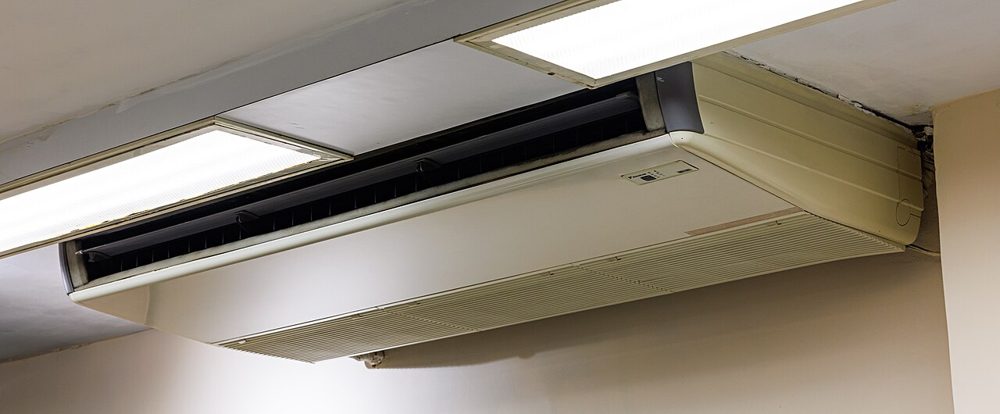 Daikin Industries
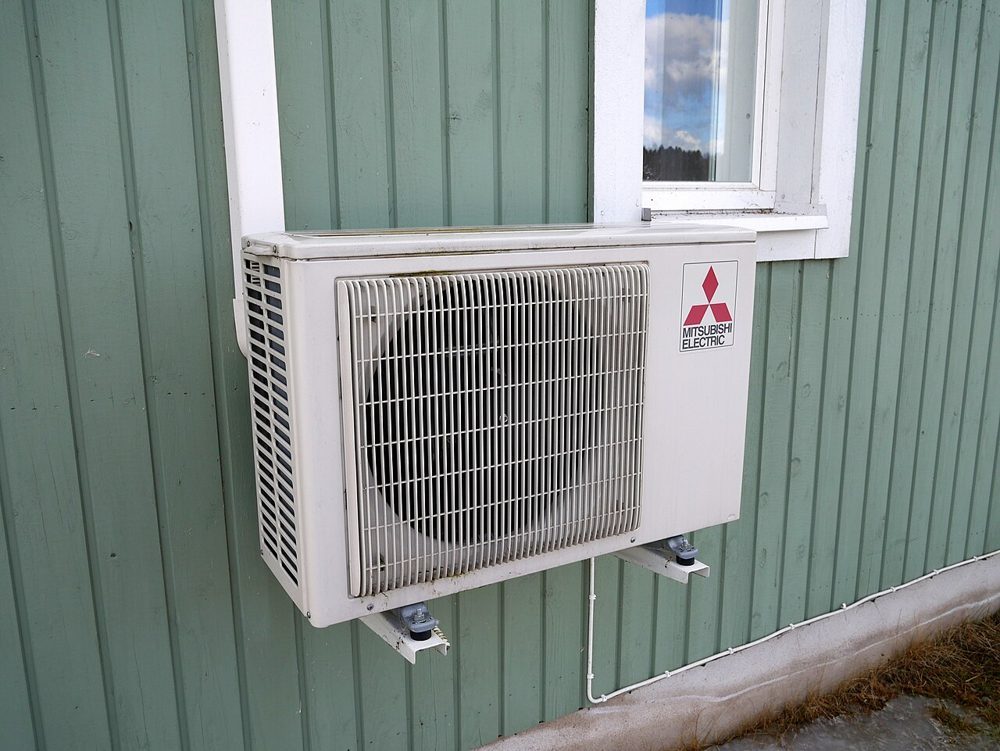 Mitsubishi Electric
Image: A Daikin Industries indoor air conditioning unit (Dinkun Chen, CC BY-SA 4.0) / A Mitsubishi Electric room air conditioner outdoor unit (Santeri Viinamäki, CC BY-SA 4.0), Wikimedia Commons


Company History: From Metalworking to Dedicated HVAC, From a Shipyard's Electrical Shop to a Full-Line Electronics Maker
Daikin Industries traces back to October 1924, when founder Akira Yamada established Osaka Kinzoku Kogyosho, a limited partnership, in Namba-shinkawa, Minami-ku, Osaka (present-day Naniwa-ku). Its initial flagship product was aircraft radiator tubing — not the starting point of an air-conditioning maker. The company succeeded in producing fluorocarbon gas in 1935, and in 1938 delivered a fluorocarbon-based refrigeration unit, the "Mifujirator," to the Imperial Japanese Navy's Kure arsenal; this parallel accumulation of chemical (fluorochemical) and refrigeration know-how became the foundation for the company's later shift to dedicated air-conditioning. In 1982 Daikin launched the world's first VRF (building multi-split) air conditioner, and in 1984 its first in-house inverter air conditioner, and from there reorganized its business around air conditioning. In 2012 it acquired Goodman Global, the largest maker of residential air conditioners in the US, for $3.7 billion (roughly ¥290 billion at the time), marking its full-scale entry into North America's ducted residential market. The company marked its 100th anniversary in 2024.
Mitsubishi Electric was established in January 1921 by spinning off and taking over the electrical equipment factory of Mitsubishi Shipbuilding's (now Mitsubishi Heavy Industries) Kobe Shipyard. At founding, its Kobe plant produced transformers, motors, and electric fans; in 1923 it separated the electrical equipment shop from the Nagasaki Shipyard to set up the Nagasaki plant, handling large heavy-electrical equipment such as turbine generators, and in 1924 it established the Nagoya plant, its first wholly independent factory, which handled general-purpose induction motors and home electrical appliances. Shizuoka Works, the core site for its room air conditioner business today, was established in April 1954 as the "Nagoya Works Shizuoka Plant" and produced small air conditioners from the outset. In 1967 the company launched the "Kirigamine" brand, still in use today, and cumulative production of room and packaged air conditioners under the Kirigamine line has since surpassed 44 million units. That air conditioning is, for Mitsubishi Electric, one business among several — alongside generators, elevators, and defense and space systems — is a positioning consistent with the circumstances of the company's own founding.
Comparing Company Scale Over Time: Total Company vs. the Air-Conditioning Business Alone
Both companies' fiscal years end in March, so the two can be compared directly over the most recent five fiscal years (FY ending March 2022 through FY ending March 2026).
| Fiscal Year | Daikin Industries Revenue | Daikin Industries Operating Profit | Mitsubishi Electric Revenue | Mitsubishi Electric Operating Profit |
|---|---|---|---|---|
| FY March 2022 | ~¥2.93 trillion (+18% YoY) | ~¥300 billion (+26% YoY) | ~¥4.4767 trillion (+6.8% YoY) | ~¥260 billion (company-forecast basis; actual ordinary profit was ¥279.6 billion) |
| FY March 2023 | ¥3.9815 trillion | ¥377.0 billion | ¥5.0036 trillion | ¥262.3 billion |
| FY March 2024 | ¥4.3953 trillion (+10.4% YoY) | ¥392.1 billion (+4.0% YoY) | ¥5.2579 trillion (+5.1% YoY) | ¥328.5 billion (+25.2% YoY) |
| FY March 2025 | ¥4.7523 trillion | ¥401.6 billion | ¥5.5217 trillion | ¥391.8 billion |
| FY March 2026 | ¥5.015 trillion (+5.5% YoY, topping ¥5 trillion for the first time) | ¥414.9 billion (+3.3% YoY) | ¥5.8947 trillion (+6.8% YoY, a record profit for a 4th straight year) | ¥433.0 billion (+10.5% YoY) |
*The FY March 2022 figures are approximations based on contemporaneous Nikkei reporting and similar sources at the time of results (exact yen-level figures were not disclosed in the sources found). Other years are confirmed figures based on each company's own earnings releases.
| Metric | Daikin Industries (whole company) | Mitsubishi Electric (whole company) |
|---|---|---|
| Net profit (FY March 2026) | ¥275.2 billion (+4% YoY) | ¥407.7 billion (+25.8% YoY) |
| Consolidated employees | ~103,544 (as of March 2025; roughly 80% work outside Japan) | 150,386 |
Over the five-year span, Daikin's revenue grew roughly 1.7x from FY March 2022 to FY March 2026, while Mitsubishi Electric's grew roughly 1.3x over the same period. On total company revenue, Mitsubishi Electric — spanning elevators, factory automation (FA), defense and space, and more — outpaces Daikin Industries. But Daikin's air-conditioning and refrigeration business alone accounts for ¥4.6211 trillion of that revenue (FY March 2026, +5.4% YoY, with ¥377.0 billion in operating profit) — 92% of the company's total revenue. Mitsubishi Electric, by contrast, discloses results at the level of its "Life" segment, which bundles elevators, air conditioning, and home appliances together; in FY March 2026 the Life segment posted revenue of ¥2.3182 trillion and operating profit of ¥170.5 billion, but because this includes businesses other than air conditioning, Mitsubishi Electric does not disclose air-conditioning revenue as a standalone figure. In other words, Daikin is, for all practical purposes, "the air-conditioning company," while for Mitsubishi Electric, air conditioning is just one business alongside elevators, defense, and space — and the very granularity of each company's disclosure reflects how much weight air conditioning carries within each company's overall business. Comparing the air-conditioning business alone, Daikin holds the world's #1 share, and Mitsubishi Electric's air-conditioning business by itself is presumably far smaller in scale.
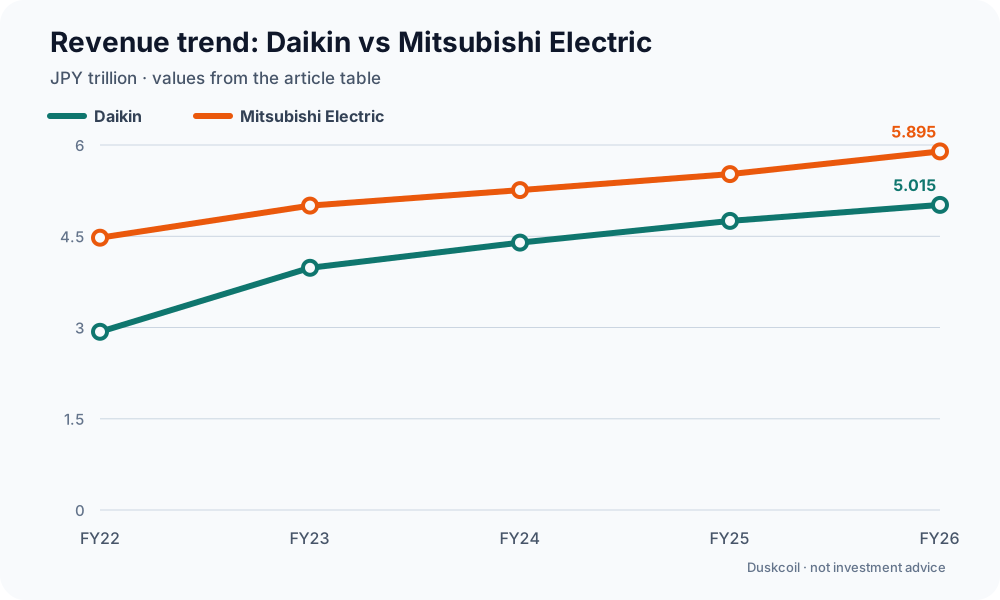
Diagram: Duskcoil. Total-company revenue in the article table, converted to JPY trillions; Mitsubishi Electric's figures are not HVAC-segment revenue. This diagram is not investment advice.
Comparing Flagship Products: Room Air Conditioners, VRF Systems, and European Heat Pumps
Room Air Conditioners: Inverter Control vs. Move Eye
Daikin Industries is widely credited as the company that spread inverter control — a technology that finely adjusts a compressor's rotation speed to produce only as much cooling or heating capacity as actually needed, a major driver of an air conditioner's energy efficiency — around the world, and it has picked up numerous awards for manufacturing and energy efficiency along the way. Its heat pump technology delivers full heating capacity with no electric heater backup even at 0°C outside air temperature, and can run continuously down to -10°C — a level that overturned the conventional wisdom about heat pump technology at the time and drew high praise from industry experts.
Mitsubishi Electric's flagship brand, "Kirigamine," is defined by its in-house-developed infrared sensor unit, "Move Eye." Where a typical air conditioner runs off nothing more than a room-temperature sensor and the intake air temperature, Move Eye estimates a person's perceived temperature from the surface temperature of the floor and walls, and even detects where in the room a person actually is, controlling airflow accordingly. It's a differentiation strategy built around sensing technology — avoiding over-cooling or over-heating while prioritizing comfort exactly where people happen to be.
Both companies build on the same underlying heat pump principle, but they've each staked their competitive edge on a different half of the problem: Daikin on the hardware side — generating and moving heat efficiently — and Mitsubishi Electric on the sensing side — finely controlling comfort.
VRF Building Multi-Split Systems: VRV vs. City Multi
Even more than in the residential market, commercial building multi-split systems — VRF (variable refrigerant flow) units in which a single outdoor unit serves multiple indoor units — are where the two companies' product lines collide head-on. Daikin's VRV line, commercialized in 1982, is the original building-multi system, the first of its kind in the world, and its strength lies in flexible piping design and support for connecting large numbers of units, which has driven its adoption worldwide. Mitsubishi Electric's City Multi lineup emphasizes high-efficiency models built around features like "AI Smart Startup," which uses AI to learn from past operating data and automatically set the optimal startup time, aimed at cutting peak power demand and saving installation space. In Japan's domestic commercial air-conditioning market, Daikin holds the #1 position with roughly 40% share, with Mitsubishi Electric #2 at roughly 20% — Daikin's edge in the commercial segment is even more pronounced than in residential.
European Air-Source Heat Pumps: Altherma vs. Ecodan
In recent years, the sharpest competition between the two companies has been in Europe's hot-water heating market. Driven by efforts to reduce dependence on Russian natural gas and by carbon-neutrality policy, Europe is undergoing a rapid shift from oil- and gas-fired boilers to electric heat pumps, and Daikin holds roughly 20% of the overall market, the largest share of any maker. Daikin's "Altherma" line (including Altherma 3 H HT) is marketed on its ability to operate even at -15°C outside air temperature, and in 2023 the company announced its entry into the building-heating segment as well, expanding beyond residential use. Mitsubishi Electric's "Ecodan" leans on its "Hyper Heating" performance — supplying 75°C hot water even at -25°C outside air temperature — to build a presence in cold-climate markets such as Scandinavia and the UK, and in April 2025 launched a new series compatible with the low-GWP refrigerant R290, backed by a local manufacturing base in the UK. Both companies are riding the same decarbonization tailwind, but Daikin is pursuing "defending its leading share while expanding into new applications," while Mitsubishi Electric is pursuing "a narrower but real edge in cold-climate performance" — two different paths to winning.
Technical Strategy and the Difference in Strengths
The difference in technical strategy between Daikin Industries and Mitsubishi Electric, already visible in the product comparisons above, comes down to Daikin pursuing "efficiency and breadth of application in air conditioning itself," while Mitsubishi Electric differentiates around "precision in sensing and control." Daikin Industries' strength lies in vertically integrated manufacturing that keeps all of air conditioning's core component technologies — fluorochemistry (refrigerants), compressors, heat exchangers — in-house, and it has a track record of leading industry standardization by developing the low-GWP refrigerant R32 and licensing the patents royalty-free. Mitsubishi Electric, beyond Move Eye's sensing technology, leans on control technology cultivated in the group's heavy-electrical and FA divisions, plus integration with its parent-level IoT platform "Serendie" (formerly Lumada), and is oriented toward extending the competition beyond individual air-conditioning unit performance and into whole-building energy management.
Development and Manufacturing Sites
Daikin Industries operates its headquarters (Osaka Umeda Twin Towers South, Kita-ku, Osaka) plus several combined air-conditioning, chemicals, and hydraulics production sites across Osaka and Shiga prefectures. Mitsubishi Electric operates its headquarters (Marunouchi, Chiyoda-ku, Tokyo), with Shizuoka Works (Shizuoka City, Shizuoka Prefecture) — the "mother factory" for room air conditioners — and Refrigeration Systems Works (Wakayama City, Wakayama Prefecture), which handles commercial packaged air conditioners and refrigeration/cooling equipment, as its main domestic sites. The map below shows the confirmed domestic sites (overseas sites are out of scope).
Sources: for Daikin Industries, the official "Domestic Sites" page (both addresses and functions are primary-source information). For Mitsubishi Electric, site names from the official "Locations" page and the "Shizuoka Works" introduction page, with addresses individually confirmed via a map/directory service (Mapion, etc.). Mitsubishi Electric also manufactures air-conditioning equipment at 9 overseas sites in 6 countries (Thailand, China, the UK, and others) beyond room and commercial packaged air conditioners — the smaller number of domestic sites reflects not only the difference in scale but also an overseas shift in production. Coordinates were geocoded to the town/chome level via OpenStreetMap Nominatim.
Business Strategy and Outlook: Daikin's Shift to "Solutions," Mitsubishi Electric's "M&A-Driven Build-Out of a Western Foothold"
In May 2026, Daikin Industries formulated its new strategic management plan, "FUSION30," targeting fiscal 2030. Improving operating margin — a lingering challenge from the prior plan, "FUSION25" (fiscal 2021-2025) — is treated as the top priority, and the company is accelerating a structural shift from simply selling equipment toward "solutions" business that supports a building's full lifecycle, targeting a 12% operating margin and 15% ROE by fiscal 2030. Its entry into Europe's building-heating market, discussed above, and the overseas business base it has built through more than 30 M&A deals — including the Goodman acquisition in North America — underpin this transition.
Mitsubishi Electric has set financial targets for fiscal 2030 under its new mid-term strategy, including an adjusted operating margin of 12% or higher, ROE of 12%, and revenue growth (CAGR) of 3-5%. On the air-conditioning and cooling business specifically, the company plans to apply the heat-processing know-how it has built up in general and industrial air conditioning to new areas such as reusing waste heat from data centers, while also stating that it will pursue partnerships and M&A actively in this field, particularly to establish a production and business footing in the North American market. This can be read as Mitsubishi Electric attempting to claw back ground, through M&A, against the position Daikin Industries built in North America's ducted residential air-conditioning market via the Goodman acquisition. Both companies treat decarbonization and global expansion as growth drivers, but where Daikin is upgrading the quality of its business — moving toward solutions — on the back of an existing overseas site network, Mitsubishi Electric is trying to build that overseas foothold from scratch through M&A — a difference that reflects where each company currently stands.
References
- Daikin Industries Official Site / Earnings Results (Japanese)
- Mitsubishi Electric Official Site / Earnings Presentation (Japanese)
- Why Daikin Industries Became the World's Top Share Leader (Japanese)
- How Mitsubishi Electric's "Kirigamine" Move Eye Works (Japanese)
- Daikin Industries Corporate History (Japanese)
- HISTORY OF DAIKIN INNOVATION (Japanese)
- Mitsubishi Electric History — The-Shashi (Japanese)
- Katsuyuki Okawara's NewsInsight: A Visit to Mitsubishi Electric's Shizuoka Works (Japanese)
- IRBANK: Daikin Industries Earnings (Japanese) / IRBANK: Mitsubishi Electric Earnings (Japanese)
- Daikin Industries FY March 2024 Earnings Deep Dive (Mynavi News, Japanese)
- Mitsubishi Electric FY March 2024 Earnings (Automation News, Japanese)
- Mitsubishi Electric FY March 2022 Net Profit +9% (Nikkei, Japanese)
- Daikin Completes Acquisition of Goodman Global (Kyodo News PR Wire, Japanese)
- Daikin Industries VRV Commercial Multi-Split Air Conditioners (Japanese)
- Mitsubishi Electric City Multi Building Multi-Split Air Conditioners (Japanese)
- Daikin Enters Europe's Building Heating Market (Nikkei, Japanese)
- Why Daikin's Altherma 4 Is Chosen in Europe (Japanese)
- Europe's Heat Pump Market Heading to €71 Billion — Daikin, Panasonic, and Mitsubishi's Local-Production Strategies (Japanese)
- Daikin Industries Strategic Management Plan "FUSION" (Japanese)
- Mitsubishi Electric IR Day 2026 New Mid-Term Management Strategy (Japanese)
- Daikin Industries Domestic Sites (Japanese)
- Mitsubishi Electric Locations (Japanese)
Current step · 20 / 21 · Corporate Research
Comments
Please log in to post a comment
No comments yet.