#VIO
 Robotics Primer
September 7, 2026
Robotics Primer
September 7, 2026
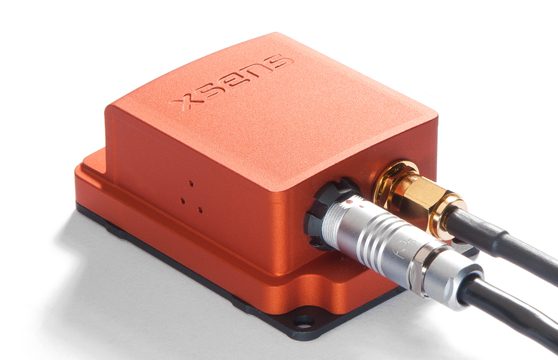
VIO/LIO Primer — Combining an IMU with a Camera or LiDAR for Self-Localization
A camera alone, or a LiDAR alone, breaks down in certain situations. Combining either sensor with an IMU (accelerometer + gyroscope) covers for that weakness -- this is what VIO (Visual-Inertial Odometry) and LIO (LiDAR-Inertial Odometry) do. Starting from why an IMU alone cannot recover position, this article works through the two design philosophies -- Filter-based and Optimization-based -- and the landmark algorithms from ROVIO, OKVIS, VINS-Mono, and OpenVINS through LIO-SAM and FAST-LIO2.
Fundamentals · 16 min Computer Vision Primer
September 3, 2026
Computer Vision Primer
September 3, 2026
VO/VIO Primer — A Practical Foundation for Estimating Motion from a Camera and an IMU
Visual Odometry (VO) and Visual-Inertial Odometry (VIO) estimate the relative motion of a robot or camera from a sequence of images and inertial measurements. This article works through monocular scale ambiguity, IMU preintegration, initialization, filtering versus optimization, implementations such as VINS-Mono and OpenVINS, evaluation metrics, and failure conditions, with math and diagrams.
Fundamentals · 17 min