Contents — find the section you need
Background and reading guide
Background Basic force, motion and energy terminology; use the linked background explanations.
Fundamentals · Explanations of principles, structure and trade-offs.
“Level 2 means the car is halfway autonomous” and “Level 3 is a slightly smarter Level 2” are tempting but wrong shortcuts. SAE J3016 does not rank sensor count, AI accuracy, or road coverage. It classifies, for a feature while engaged, who performs steering, acceleration, braking, monitoring, event response, and fallback when the feature reaches its limit.
One vehicle can contain Level 0 automatic emergency braking, a Level 2 highway-assistance feature, and a Level 3 traffic-jam feature under tightly limited conditions. A permanent level is not attached to the whole vehicle. The useful question is always: which feature, engaged in which operational design domain, with which division of responsibility?
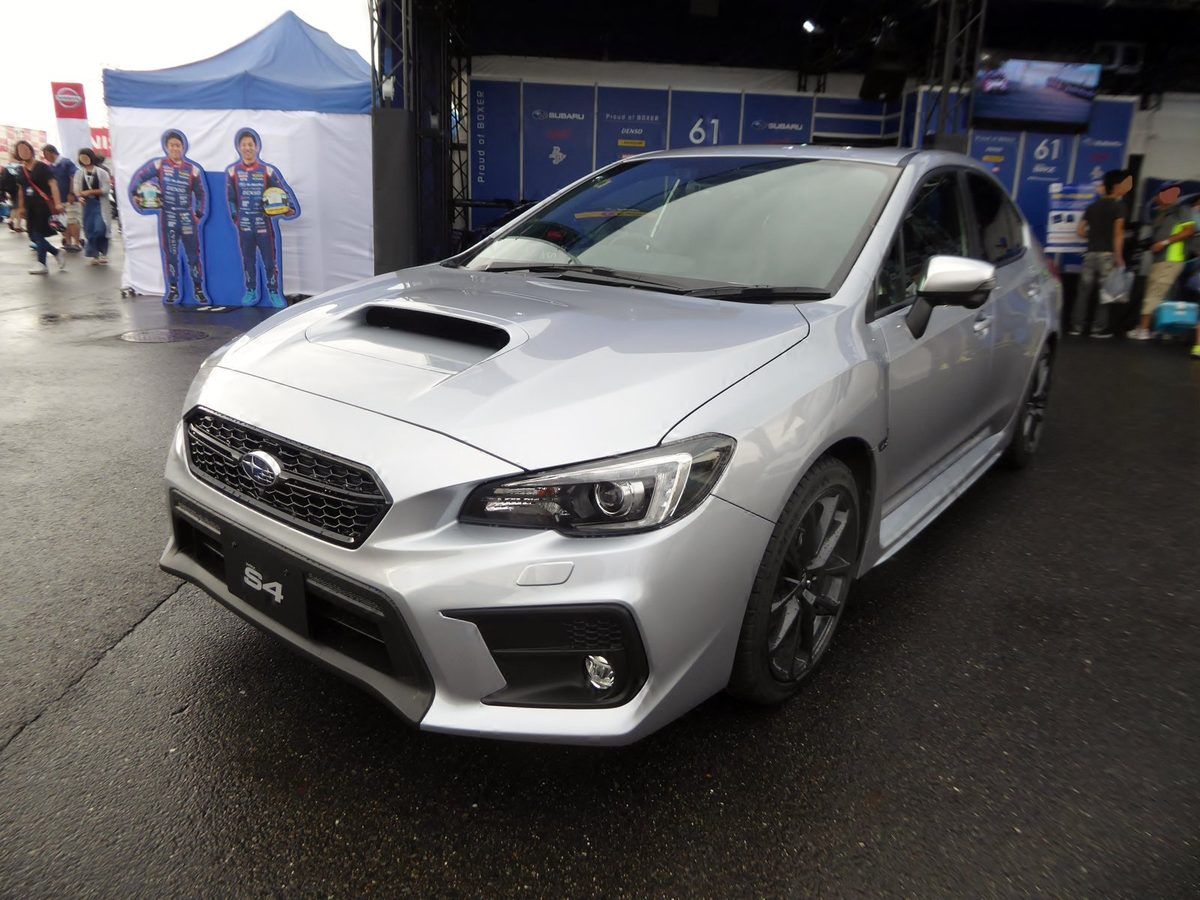 Example of a production vehicle with ADAS sensing
Image: Subaru WRX S4 2.0GT-S EyeSight (Tokumeigakarinoaoshima, CC BY-SA 4.0), Wikimedia Commons. The exterior photograph does not by itself identify an automation level or document the internal system architecture.
_front.jpg)
The short conclusion
- At Levels 0–2, the human drives and continuously supervises the support feature. Level 2 can control steering and speed together, but it is not permission to stop monitoring.
- At Levels 3–5, an automated driving system (ADS) performs the complete dynamic driving task while engaged. At Level 3 it may request human fallback; Level 4 must achieve a minimal-risk condition within its ODD without depending on human response.
- The main difference between Levels 4 and 5 is the ODD. Level 4 is limited; Level 5 conceptually covers all roadway and environmental conditions a human driver can manage.
- A higher level is not a safety certificate. The taxonomy specifies roles, not crash rate, perception accuracy, redundancy, or product quality.
- Takeover time includes detection, decision, notification, human situation reconstruction, and actuation. A mean button-response time is not sufficient.
- Safety evidence combines scenario coverage, faults and attacks, near-crash margins, unnecessary interventions, simulation, HIL, tracks, and controlled public-road operation.
Four questions determine a level
Figure 1 — The central boundary is between Levels 2 and 3. The distinction is not steering magnitude; it is who monitors and completes the dynamic driving task.
Level determination can be organized around four questions.
- Who performs sustained lateral control and longitudinal control?
- Who performs object and event detection and response (OEDR)?
- Who performs dynamic-driving-task fallback when the feature reaches a limit?
- Is operation restricted to an operational design domain?
The dynamic driving task (DDT) includes real-time operational and tactical work: steering, braking, accelerating, lane selection, responding to signals, and avoiding objects. Strategic trip selection is normally outside it. OEDR means detecting and responding, not simply producing detections.
An ODD is a set of roads, geography, speeds, weather, illumination, surface, traffic, map, and sometimes connectivity conditions in which a feature is designed to operate. For condition vector x,
If a required condition c_i becomes false, the feature must reject engagement or reach a safe termination. A requirement that cannot be sensed—such as “operate only when visibility is good” without a validated visibility estimate—is not yet an executable ODD monitor.
Level 0: momentary intervention is still possible
At Level 0 the human performs sustained steering and speed control. Forward-collision warning, lane-departure warning, blind-spot warning, and a momentary automatic emergency braking intervention can fit here. Automatic movement alone does not imply Level 1; the distinction is sustained control rather than a warning or brief emergency action.
Production ADAS commonly combines camera classification with automotive radar range and relative speed. A simple closing-speed time to collision is
It breaks down for lateral cut-ins and changing acceleration. Safety evaluation must measure false braking as well as missed braking because an unnecessary hard stop can create a rear-impact risk.
Level 1: steering or speed support
Level 1 continuously supports either steering or acceleration/braking. Adaptive cruise control is a longitudinal example; lane centering is a lateral example. The human performs the remaining control and all monitoring.
A common following-distance target is
where d_0 is standstill clearance, T_h is time headway, and v is ego speed. If braking distance grows in rain or on a downgrade, T_h should not stay fixed—it should track a road-surface estimate. Two Level 1 products can have very different safety envelopes even though their taxonomy label is identical.
Level 2: steering and speed support, while the human drives
Level 2 can simultaneously center the vehicle and follow traffic. “Hands off” under a particular design does not automatically mean “eyes off.” SAE groups Levels 0–2 as driver support: the human continuously supervises and must correct the feature.
Current examples include highway lane-and-distance support, traffic-jam assistance, and navigation-guided lane changes. Product names are not sufficient evidence of level. Region, model year, software release, road class, speed, weather, and the owner's manual can change the actual feature contract.
A driver monitoring system might combine gaze, head pose, eyelid state, and steering-wheel interaction into a simple attention score:
Sunglasses, glare, camera occlusion, disability, and individual behavior make any one threshold incomplete. DMS should verify the supervision assumption and trigger staged alerts and a controlled stop. It does not transfer responsibility by merely sounding a warning.
Level 3: the system drives, but may request human fallback
At Level 3, the ADS performs the complete DDT and OEDR within a limited ODD. The fallback-ready user need not continuously monitor the road but must respond to a request to intervene. This transition is difficult because a person returning from another task must reconstruct the traffic scene before acting.
Available time T_{hazard} should satisfy at least
T_{human} is not a reflexive button-press time; it includes gaze return, situation understanding, decision, and motor action. Evaluate the tail of the distribution under sleepiness, age, night, and realistic secondary tasks.
A takeover request does not make responsibility change instantaneously. The driver may fail to hear it, misunderstand it, or be medically unable to respond. The system still needs a risk-reducing maneuver—controlled deceleration, lane retention, hazard lights, or a feasible shoulder stop—whose safety depends on road geometry and following traffic.
Level 4: complete operation within a limited ODD
At Level 4 the ADS performs the complete DDT and fallback within its ODD without depending on human response. Low-speed shuttles, geofenced robotaxis, mines, ports, and logistics yards are natural deployment domains because geography, speed, and interactions can be constrained.
Remote assistance can suggest a path or clarify a scene without continuously driving. Remote driving directly controls motion. Do not collapse the two into “teleoperation.” A Level 4 safety case must cover loss of communication, server overload, operator-to-vehicle ratio, latency, authentication, and a local minimal-risk condition. V2X communication can extend awareness, but must not silently become a single point of failure.
Level 5: the all-conditions concept
Level 5 is not restricted to a particular ODD and covers roadway and environmental conditions that a human driver can manage. It does not mean every point on Earth, but it remains an enormous scope: obscured markings, snow, temporary police gestures, construction, disasters, unusual vehicles, and regional road customs.
As of 2026, a consumer cannot buy a vehicle that operates at Level 5 over general public roads. NHTSA likewise explains that the highest automation currently available to consumers still requires driver engagement. Separate a future research target from the capability a customer may activate today.
Why a higher level does not prove greater safety
The level states roles. It does not state collision probability, perception recall, redundancy, cybersecurity, or validation quality. A well-validated Level 4 shuttle in a restricted campus and a broad Level 2 highway feature cannot be ranked by the number alone. Safety must be evaluated separately.
Functional safety and SOTIF
ISO 26262 functional safety addresses unreasonable risk from malfunctioning E/E systems: sensor disconnection, CPU or memory faults, actuator faults, and power failure. ISO 21448 SOTIF addresses hazards from functional insufficiency without component failure: a camera that is intact but cannot interpret glare, fog, or an unusual object. Cybersecurity adds adversarial manipulation of GNSS, maps, in-vehicle networks, V2X, and software update systems.
Redundancy is not simply doubling something
Redundancy also requires common-cause analysis. Two cameras may fail in the same glare. Diverse camera, LiDAR, and radar physics can help, but they may still share the same clock, map, power source, or fusion software.
Quantifying safety margins
Road mileage alone is inefficient for rare critical events. Build a scenario catalog from field data and safety analysis, vary parameters in simulation, and correlate software-in-the-loop, hardware-in-the-loop, proving-ground, and controlled road evidence.
For relative distance d and relative speed \Delta v>0, a simplified estimate of the required constant deceleration to stop is
Compare it with friction- and actuator-limited a_{avail}. The ratio a_{req}/a_{avail} reveals diminishing margin, but it does not describe lateral escape, a following vehicle, or pedestrian response; retain the scenario context.
Develop scenarios from functional to logical to concrete. “A pedestrian emerges from occlusion” becomes ranges of speed, occluder size, illumination, friction, and emergence time, then concrete sampled tests. Importance sampling and falsification target boundary failures more efficiently than uniform random driving.
At minimum, report collisions and severity, minimum distance and TTC, driver interventions and their causes, system-induced harsh braking or steering, ODD-monitor errors, time to minimal-risk condition, fault-detection latency, and simulation-to-vehicle discrepancy.
Comparing current ADAS correctly
| Field | What to document |
|---|---|
| ODD | road class, geography, speed, weather, light, work zones |
| human role | continuous monitoring, gaze, hands, takeover response |
| control scope | lane, following, lane change, merge, signals, parking |
| sensing | camera, radar, LiDAR, ultrasonic, map, V2X |
| fallback | human, in-lane stop, shoulder stop, remote assistance |
| updates | software version, map version, changes to ODD and instructions |
Concurrent ACC and lane centering are commonly Level 2 because the driver monitors. A limited feature performing the complete DDT and requesting fallback may be Level 3. A driverless service that completes fallback inside a geofence may be Level 4. Read the approved feature and instructions, not the marketing name.
Boundary cases that expose the logic
Can automated parking be Level 4?
An automated-parking feature can be Level 4 at very low speed if its ODD is a limited car park, the human does not monitor the environment, and the system can stop safely without a human response. This shows that classification depends on the division of roles, not on speed or technical flashiness.
Why is a powerful AEB still Level 0?
AEB can apply strong braking right before a collision, but it does not continuously perform ordinary driving. The strength of a momentary intervention is a separate axis from the automation level.
If hands can leave the wheel at Level 2, why is it still called human-driven?
The classification depends not on hand position but on who monitors the surroundings and compensates for failure. A gaze-monitored hands-off Level 2 feature is possible, but the responsibility for finding what the feature cannot perceive, and acting on it, still rests with the human.
Development checklist
- For every feature, assign sustained control, OEDR, and fallback in plain language.
- Turn the ODD into measurable conditions and identify conditions the vehicle cannot directly observe.
- Define boundary warning time, safe disengagement, and minimal-risk behavior for false ODD decisions.
- At Level 2 validate supervision and DMS; at Level 3 validate realistic takeover distributions.
- Analyze hardware faults, performance insufficiency, and attacks separately, then search for common causes.
- Carry the same scenario ID through simulation, HIL, track, and road evidence.
- After OTA updates, reconcile the safety case, ODD, manual, model, maps, and stored evidence.
Summary
SAE Levels 0–5 are not a staircase of intelligence. They describe who performs sustained control, OEDR, and fallback, and where the feature may operate. The most important boundary is Level 2 versus Level 3: at Level 2 the human drives and supervises; at Level 3 the ADS performs the DDT while engaged.
Ask about the ODD, boundary detection, transition time, minimal-risk condition, and validation evidence before asking for the level number. That turns the vague phrase “self-driving” into testable responsibilities across sensing, control, human factors, connectivity, and regulation.
Does a higher automation level mean operation everywhere?
Read the allocation of driving responsibilities separately from operating conditions. The level alone does not specify usable roads or weather.
References
- SAE International — J3016 Levels of Driving Automation visual chart
- SAE Mobilus — J3016 taxonomy and definitions
- NHTSA — Automated Vehicle Safety and Levels of Automation
- NHTSA — Standing General Order on ADS and Level 2 ADAS crash reporting
- ISO — ISO 26262 Road vehicles — Functional safety
- ISO — ISO 21448 Road vehicles — Safety of the intended functionality
- UNECE — UN Regulation No. 157 Automated Lane Keeping Systems
Current step · 1 / 5 · Connected & Autonomous Driving
Comments
Please log in to post a comment
No comments yet.